Ranan Samanya Photography
fashion runways, portraits & personal branding, environment, and documentary photography
Remarkable world heritage site in Hoi An

Triều Châu, the first assembly hall after the Japanese wooden bridge, built in 1845. (Canon EOS 7D, Canon EF 24-105 f/4L IS @47mm, f/8.0, 1/160sec, ISO 400)
Two main reasons why this page took so long to materialize are because I don’t have too many notes on this one and there are no pictures that satisfy myself. So consider this as a supplement to my Vietnam scrapbook, please. As usual, click on the pictures to see the fine details.
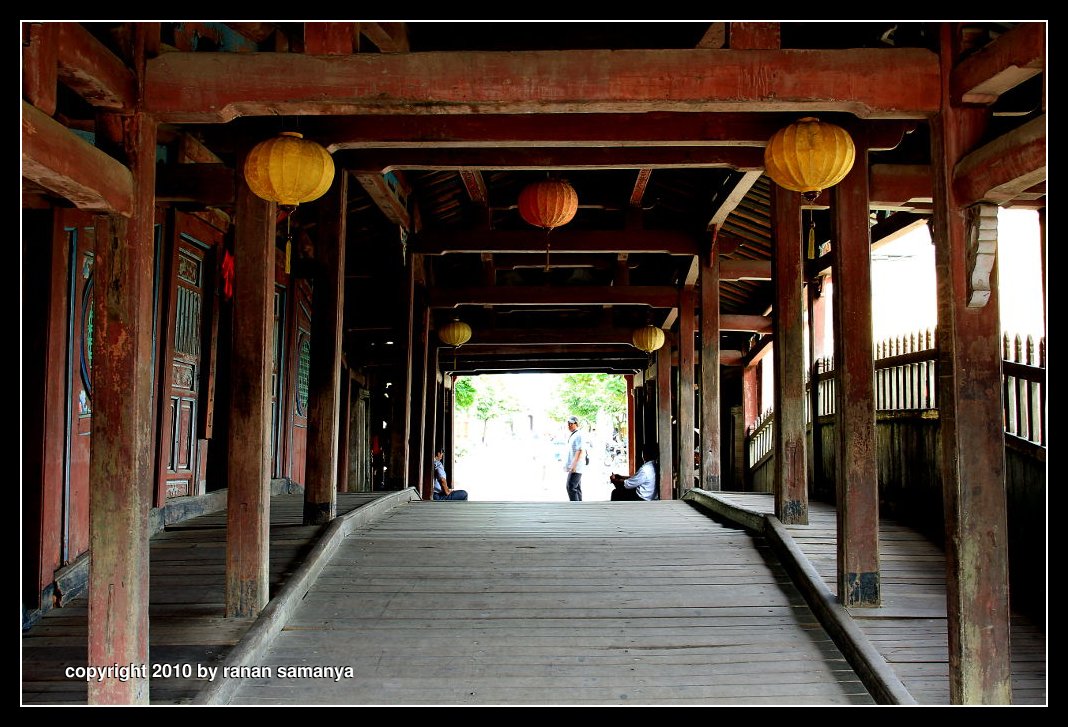
"Inside" the Japanese wooden bridge. On the left side is entrance to the temple. (Canon EOS 7D, Canon EF 24-105 f/4L IS @28mm, f/6.3, 1/10sec, ISO 400)
There is a part of Hội An that is well protected. It is the old town. It is the main reason Hội An is considered a World heritage site by UNESCO. To enter this old town compound we need to purchase a ticket. A Japanese wooden bridge serves as the main entry point. The ticket can also be used inside to enter 5 out of 18 attractions which include old houses, communal, assembly halls, and museums.
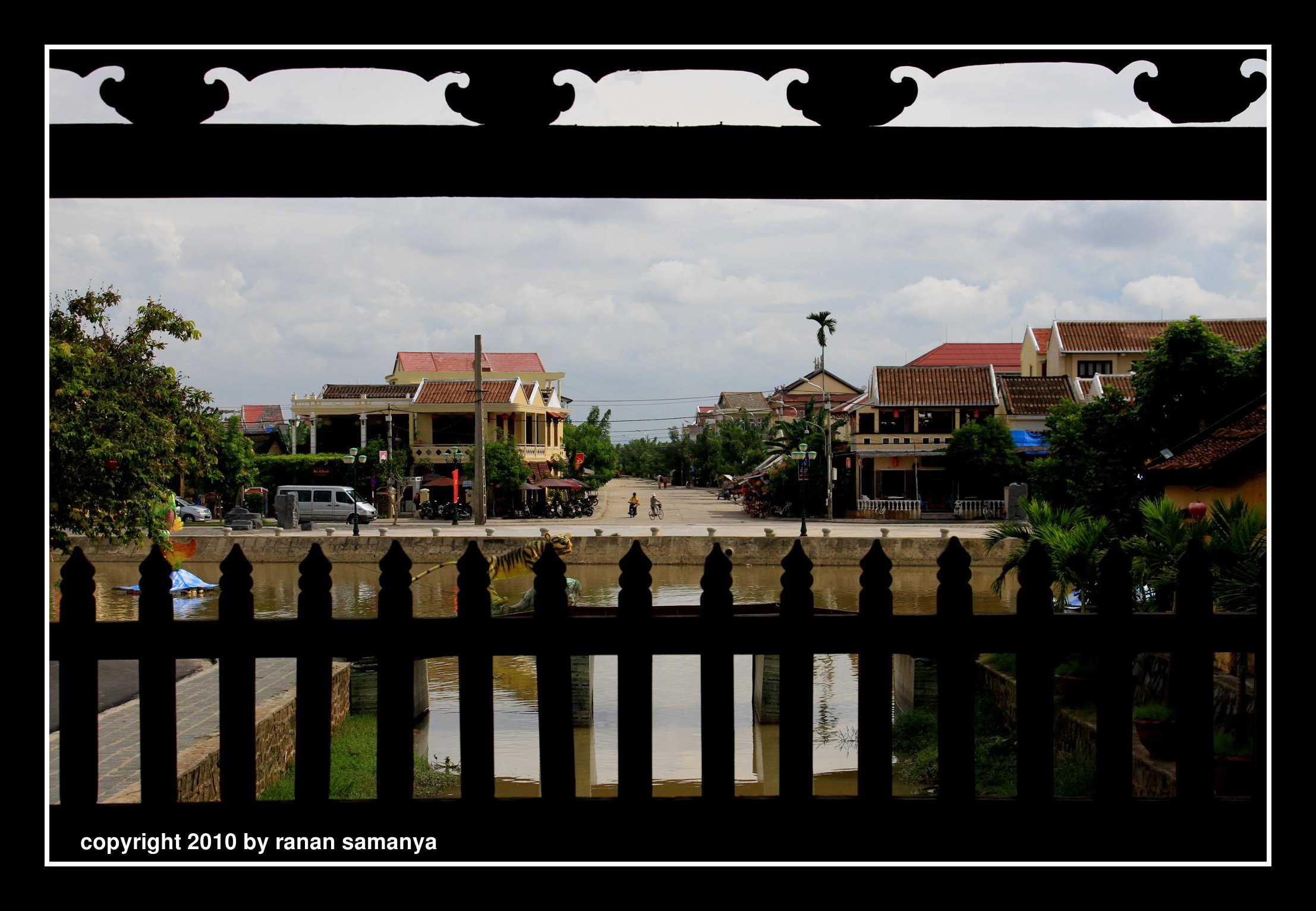
Looking out to the "modern world" from the Japanese wooden bridge. (Canon EOS 7D, Canon EF 24-105 f/4L IS @105mm, f/11.0, 1/90sec, ISO 400)
Part of the money collected from the tickets are then given back to owners of the old buildings so they can maintain them. Most old houses are still occupied, and the owners will greet us into their home, explaining the history with patience. I like this system, which is organised by the Hội An city People’s Committee. It doesn’t force people out of their properties with historical values, while at the same time preserve the properties and even make them functional.
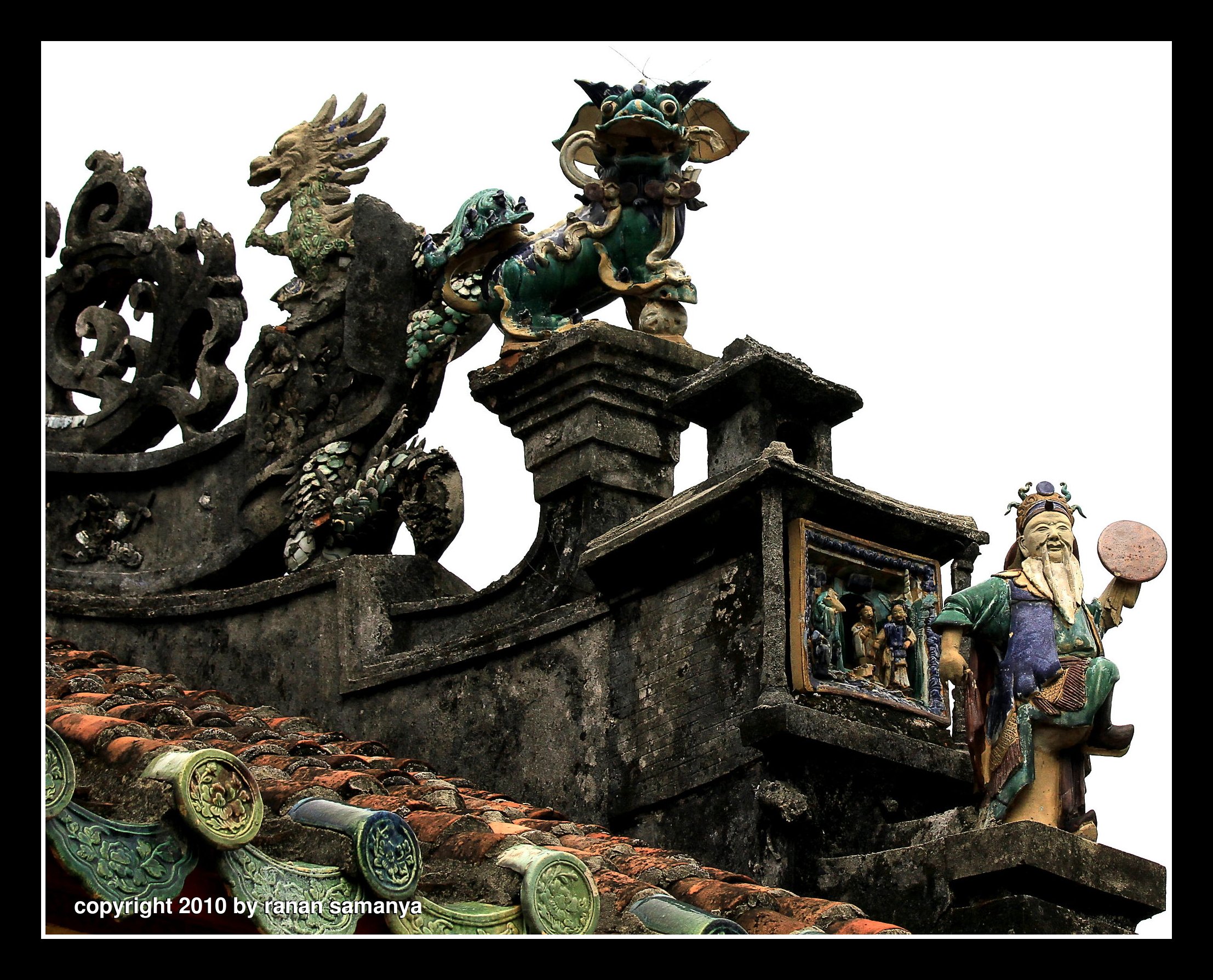
Roof ornaments on Triều Châu. (Canon EOS 7D, Canon EF 24-105 f/4L IS @105mm, f/11.0, 1/90sec, ISO 400)
Entering the centre of the old town is like being in a Shaolin Temple movies. This is, after all, the first Chinese settlement area in Southern Vietnam more than 2,000 years ago.
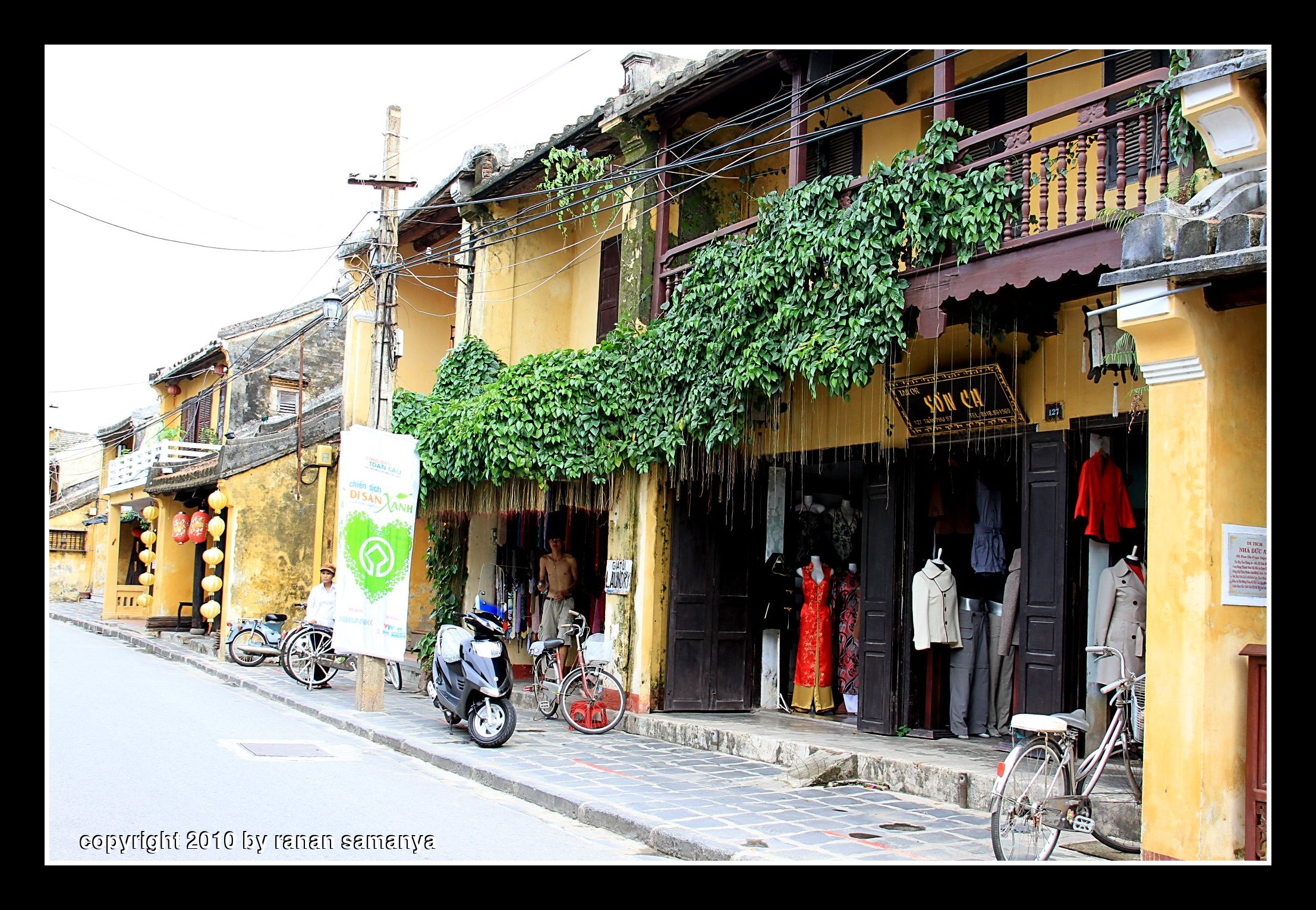
(Canon EOS 7D, Canon EF 24-105 f/4L IS @24mm, f/6.3, 1/160sec, ISO 400)
Old brick walls in fainted dark yellow and old wooden houses, most of them are now converted into either a souvenir shop, cafe, restaurant, or tailor.
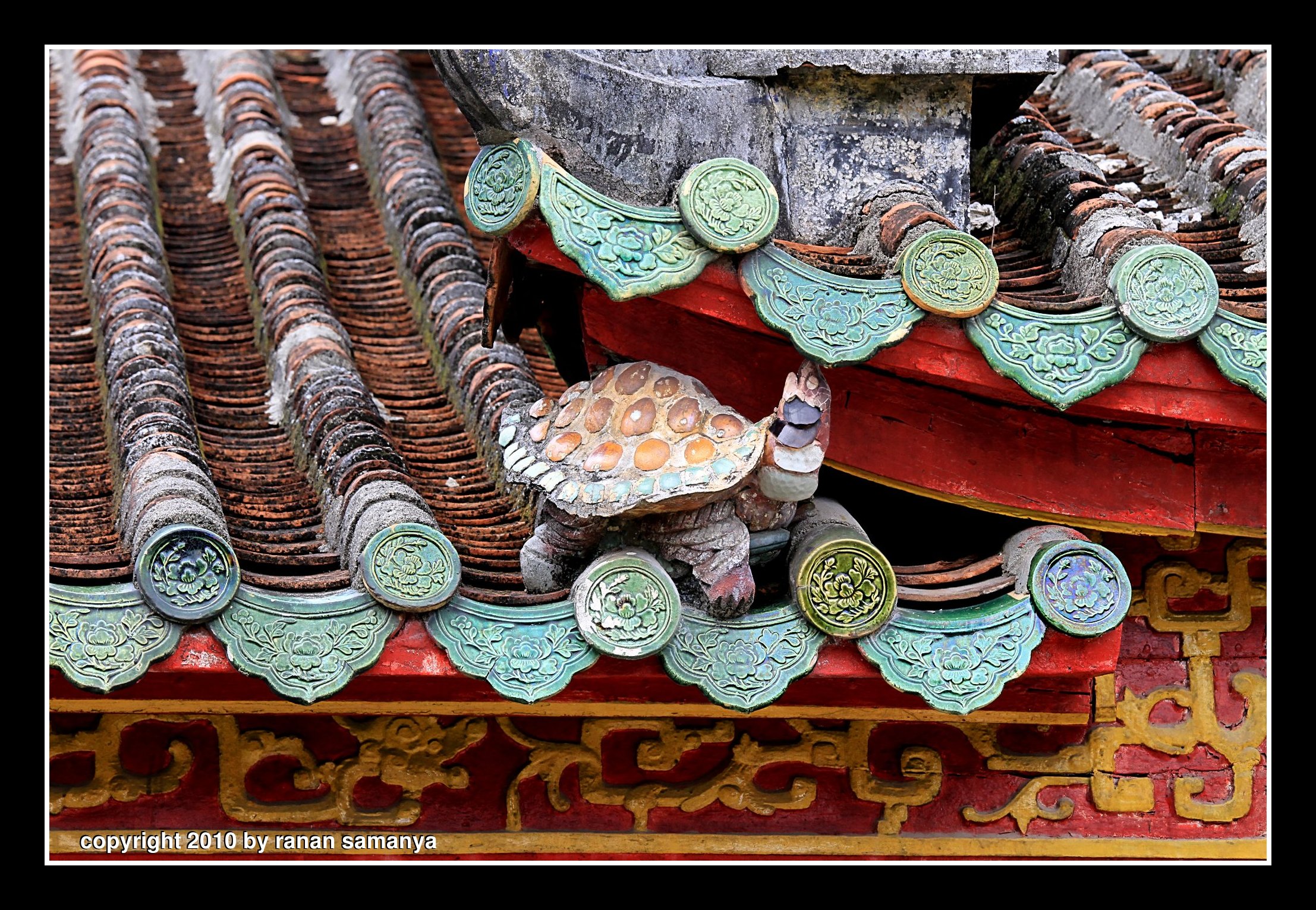
On top of Phúc Kiến assembly hall. (Canon EOS 7D, Canon EF 70-200 f/4L IS @135mm, f/8.0, 1/160sec, ISO 400)
Many of the properties have one or more animal statues, in a pond, on the garden, or on top of the roof, with cement based and mosaic ceramic top.
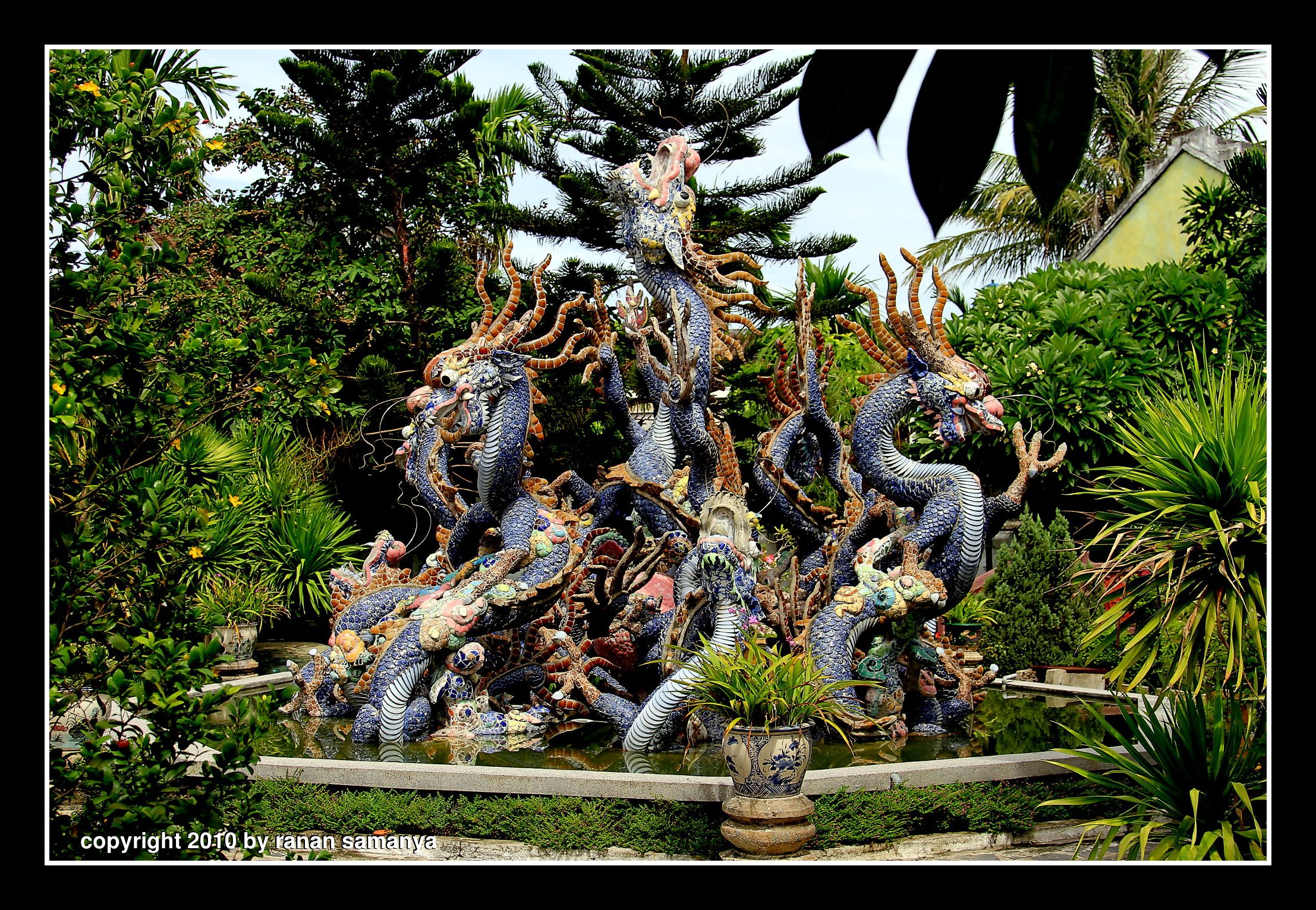
Dragons in Cẩm Phô Communal house. (Canon EOS 7D, Canon EF 24-105 f/4L IS @32mm, f/4.0, 1/640sec, ISO 100)

Inside the second floor of Phùng Hưng old house. Behind the three puppets is a trap door that will send you back down. This was meant for enemies. (Canon EOS 7D, Canon EF 24-105 f/4L IS @24mm, f/5.6, 1/4sec, ISO 800)
Securities are strict inside this compound. No motor vehicles are allowed to run their engines. At one time a naughty local wet with his motorcycle engine on. Straight away whistles were blown and several security personnel went after him. The area is also clean; I hardly saw cigarette butts on the street. Two thumbs up for Hoi An and its city People’s Committee.
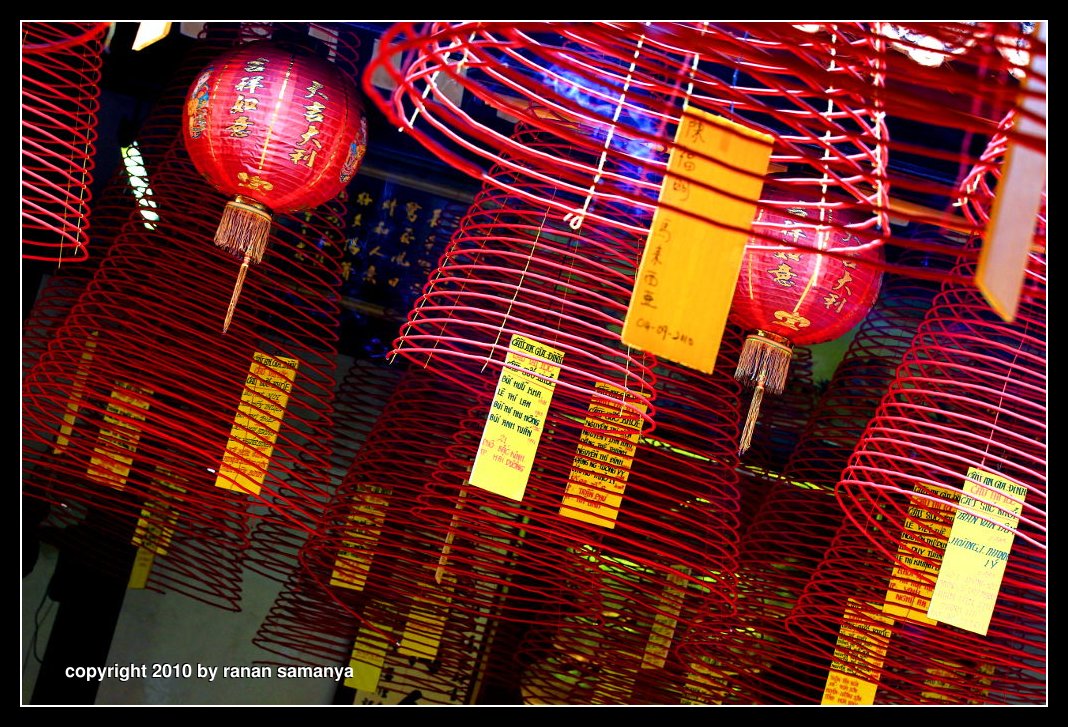
Giant incense in Triều Châu last for 30 days. The yellow cartoon contains wishes from families and friends to particular person. (Canon EOS 7D, Canon EF 70-200 f/4L IS @70mm, f/6.3, 1/20sec, ISO 400)
The duo tone of Pacific Reef Egret
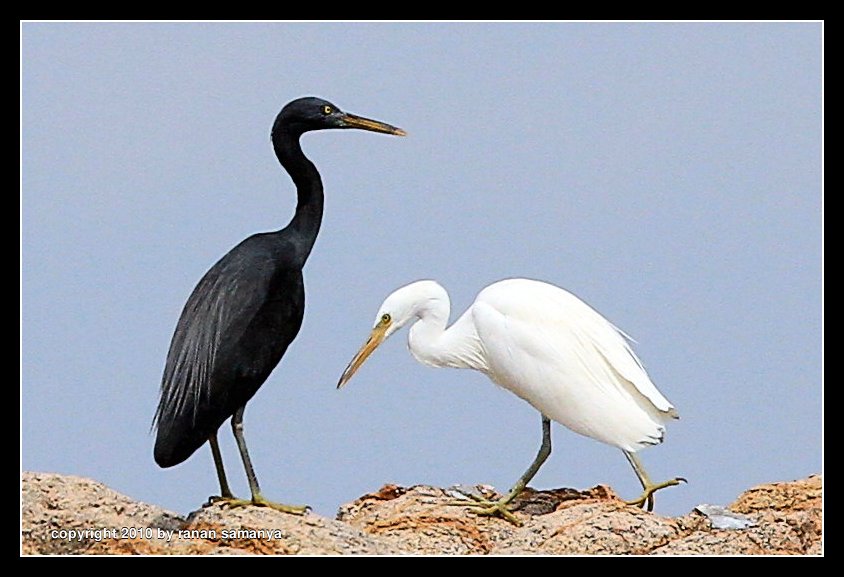
It was a good morning today. Actually, a really good morning, as we found three new bird species on the northern shoreline of Bintan. One of them are these Pacific Reef Egrets, Egretta sacra (or Kuntul Karang in Indonesian), were spotted only 5 minutes after we departed our Bandar Bentan Telani Ferry Terminal for our routine turtle and (our newly developed) migratory birds survey.
The plumage polymorphism is a known variation in herons, including this species. Some scientists observed that different colour show different feeding habits. In a few places in Australia, the white ones (white phase) sought prey by a flight, land, and freeze hunting style in breaking surf, while dark birds (dark phase) pursued prey by actively walking or running on reef flats. We are yet to see this interesting foraging behavior in Bintan.
Pacific Reef Egrets are sedentary animals, they do not migrate. The are widespread in Korea, Japan, China, all the way down through Southeast Asia to Australia and New Zealand.
The tide was almost at its peak when we departed, and 1 hour from falling down. It is possible that they were waiting for low tide to start enjoying seafood.
[Canon EOS 7D, Canon EF 70-200 f/4L IS @191mm, f/7.1, 1/4000sec, ISO 640]
How a crocodile lazying around
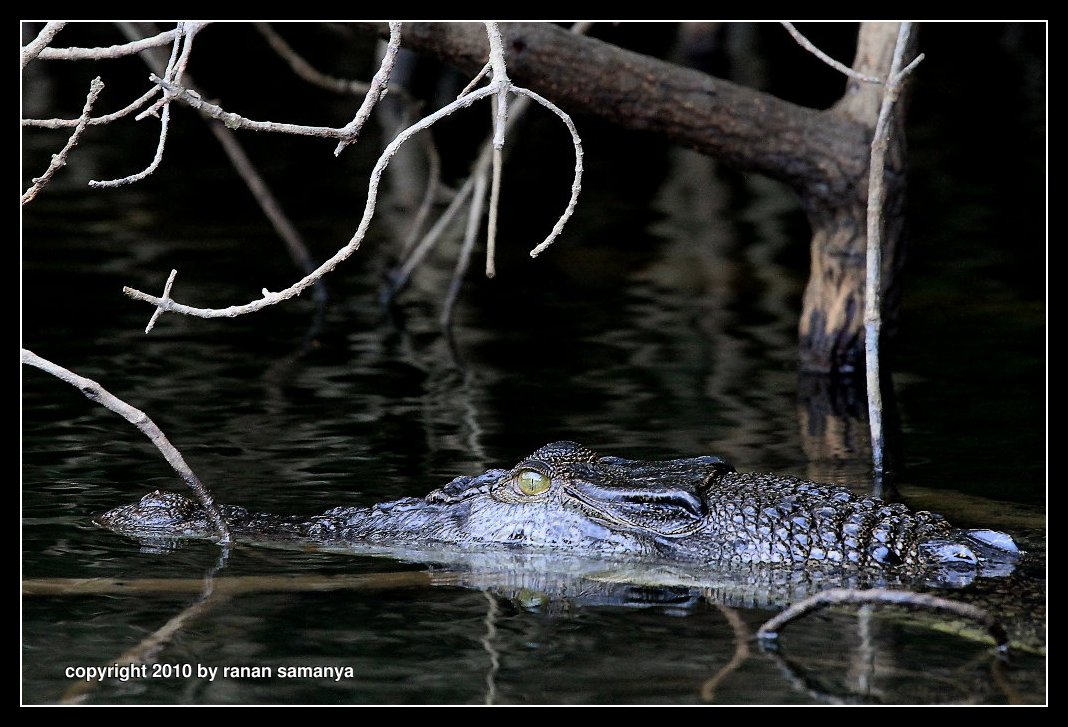
Today’s short note came from my mangrove sedimentation monitoring. The day was hot, but clouds were hanging at a distance. As usual, it was our boat crew who spotted any interesting objects, including this small estuarine crocodile (Crocodilus porosus). And as any other crocodiles found here to date, it was laying on submerged mangrove branches, enjoying the peaceful afternoon (until we came, that is). I noticed that they only need to support their head on the branches, while all 4 legs were hanging in the water.
Umm…, honestly, this is the second species found, thus not too much yet. But there should be more. Maybe a night survey of this intriguing beast will do good. Or maybe let’s stick with the daytime ones, shall we?
Click on the image to feel its black metallic skin.
[Canon EOS 7D, Canon EF 70-200 f/4L IS @200mm, f/5.6, 1/60sec, ISO 1600]
Banh Xeo – Vietnamese crepes
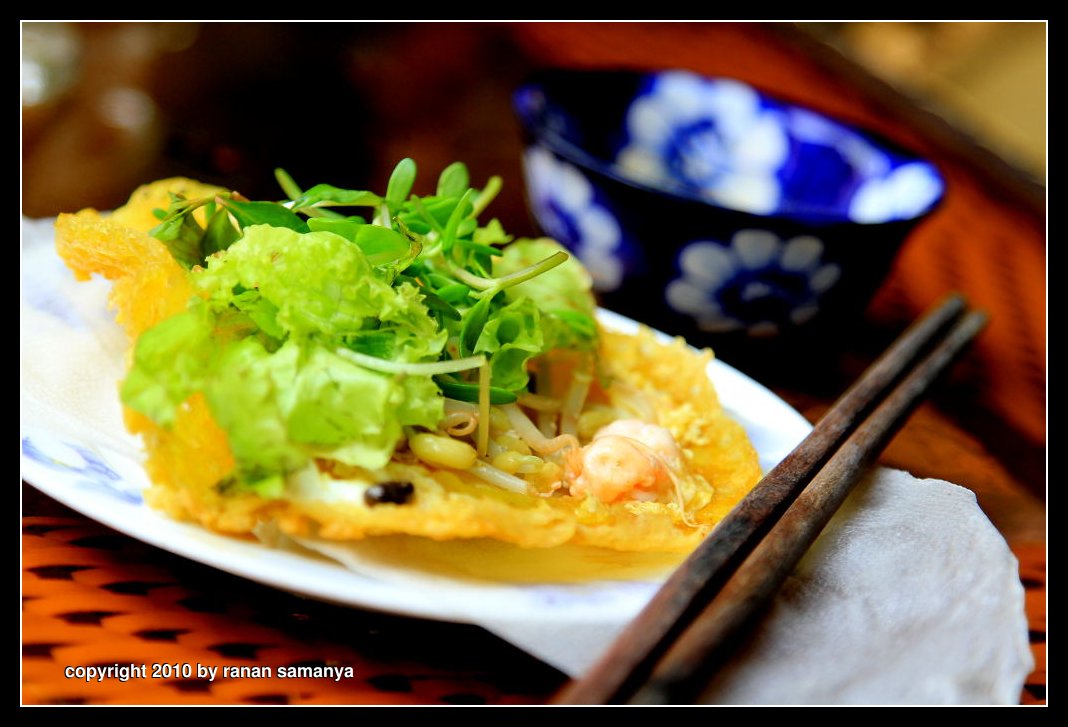
Crispy, savoury, and mint. That’s how it taste. Bánh xèo in English means sizzling cake. Although it varies from region to region, basically it is a deep fried rice-flour pancake with bean sprouts and a choice of meat (usually pork) or shrimp or both. Top it with lettuce and other fresh crispy greens. Fold it in two, then use the thin rice paper wrapper to wrap around it. Dip it in the dip sauce (another savoury mix of fish sauce, salted soy beans, lime and other exotic ingredients).
It is, like I said before: crispy, savoury, and mint. Very tantalizing. Here’s one I ate in one of the cafe in Hoi An’s ancient city.
[Canon EOS 7D, Canon EF 24-105 f/4L IS @82mm, f/4.0, 1/60sec, ISO 400]
A peek to Hoi An’s traditional dance
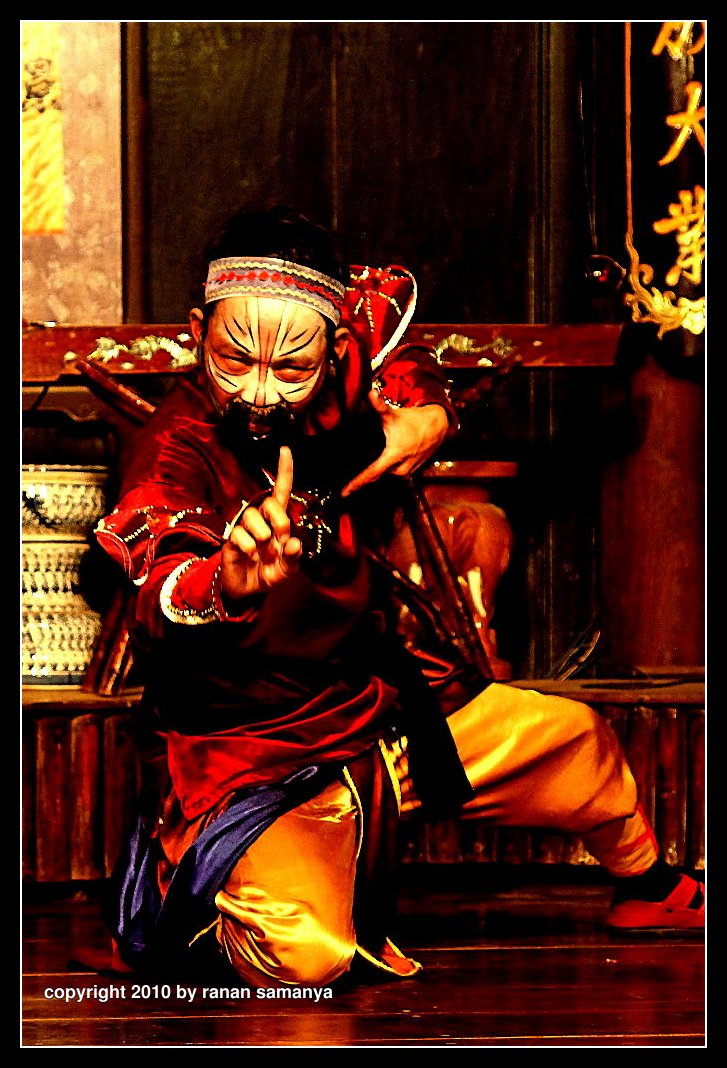
(Canon EOS 7D, Canon EF 24-105 f/4L IS @67mm, f/5.6, 1/15sec, ISO 1600)
Hoi An is packed with history and culture. One evening in the old city (which I will tell later) we went into a traditional dance performance by local artists. This is a small scale performance. Aside from our old city tickets, we didn’t have to pay additional fees for this. We arranged our (tiny) chairs ourselves and was entertained with folks music and dances.
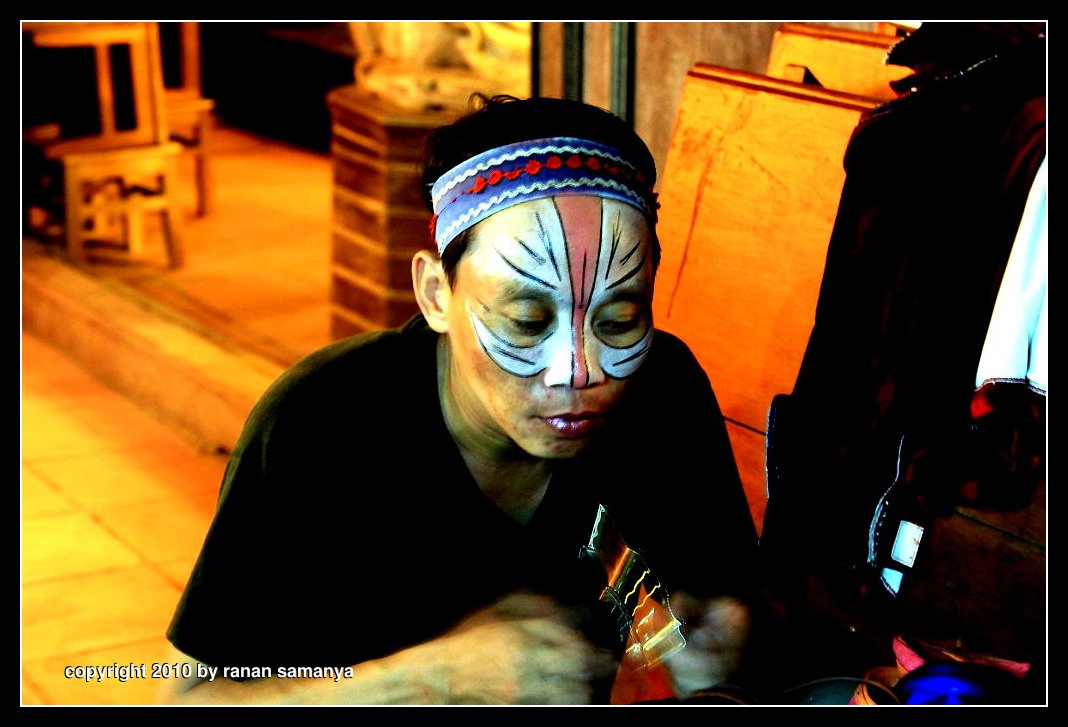
There were no makeup artist, all were done by themselves at the backstage. (Canon EOS 7D, Canon EF 24-105 f/4L IS @50mm, f/4.0, 1sec, ISO 1600)
I have to admit that I’ve had better pictures. Even the ISO1600 was not enough to freeze their movements. And although I have setup my tripod, I ended up not using it. BAM! But I’ll post this anyway. 😉
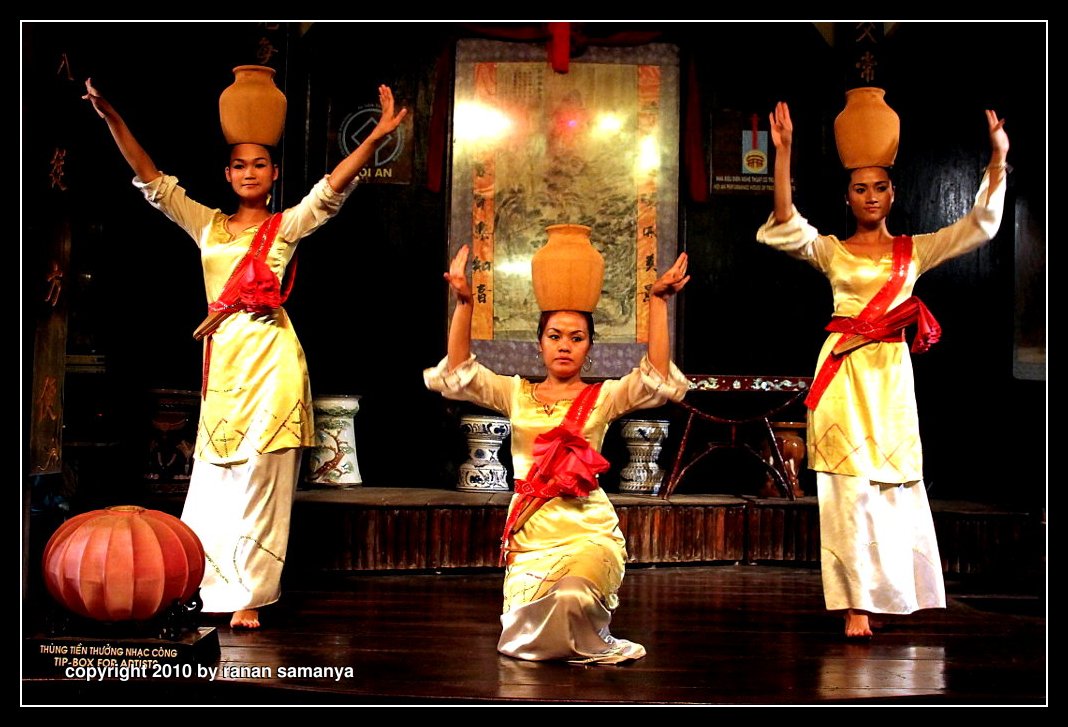
(Canon EOS 7D, Canon EF 24-105 f/4L IS @24mm, f/4.0, 1/80sec, ISO 1600)
Monsoon trash is beach’s rash
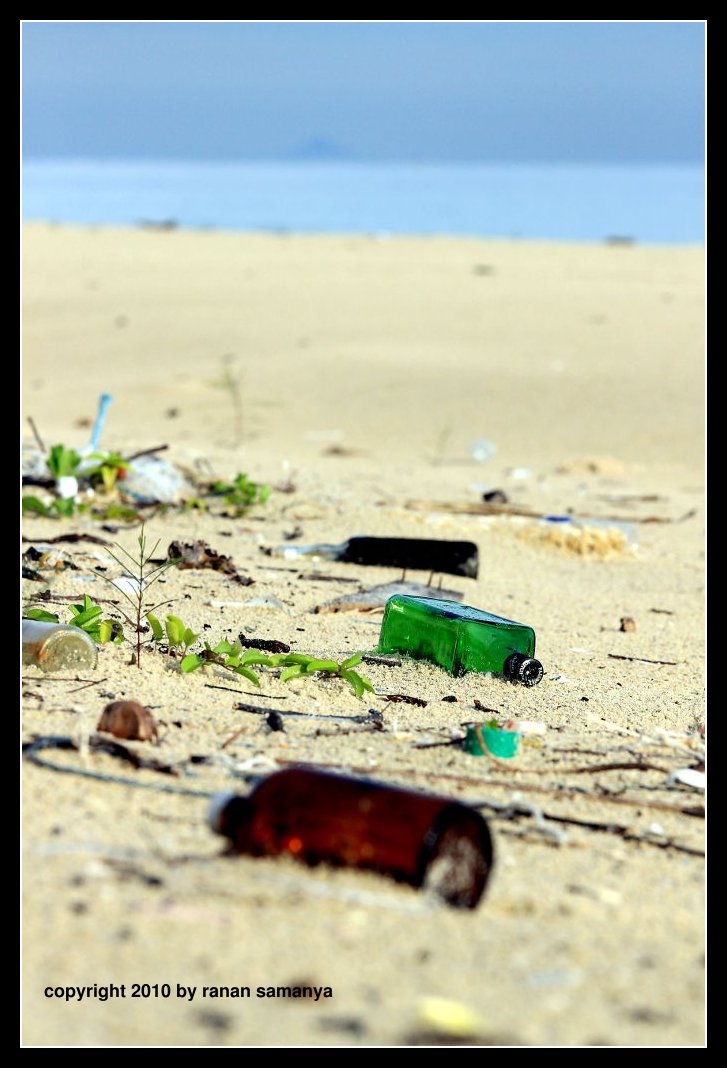
(Canon EOS 7D, Canon EF 70-200 f/4L IS @138mm, f/8.0, 1/1000sec, ISO 400)
Monsoon is here. Yet to show its power, this year’s monsoon in Lagoi started with a routine afternoon shower with once or twice weekly morning shower.
And with monsoon comes trash from open water. It comes from several countries like Singapore, Malaysia, and Thailand (judging from the labels on them that are sometimes still visible), and probably also from Indonesian waters. It comes in a variety of forms, from used flippers and shoes to soft drink bottles, used condoms (geez!) and thick oil in double bags (how thinkful of those who dumped them) from ship tank cleaning.
A beach cleanup in 2007 (see Dewi tells a long story – “ICC-Bintan (Lagoi)!) collected more than 2 tonnes of trash along a 2km stretch of beach. And that was done only for 2 hours. Maybe it’s about time we do such a fun thing again. Mmm… any volunteer?
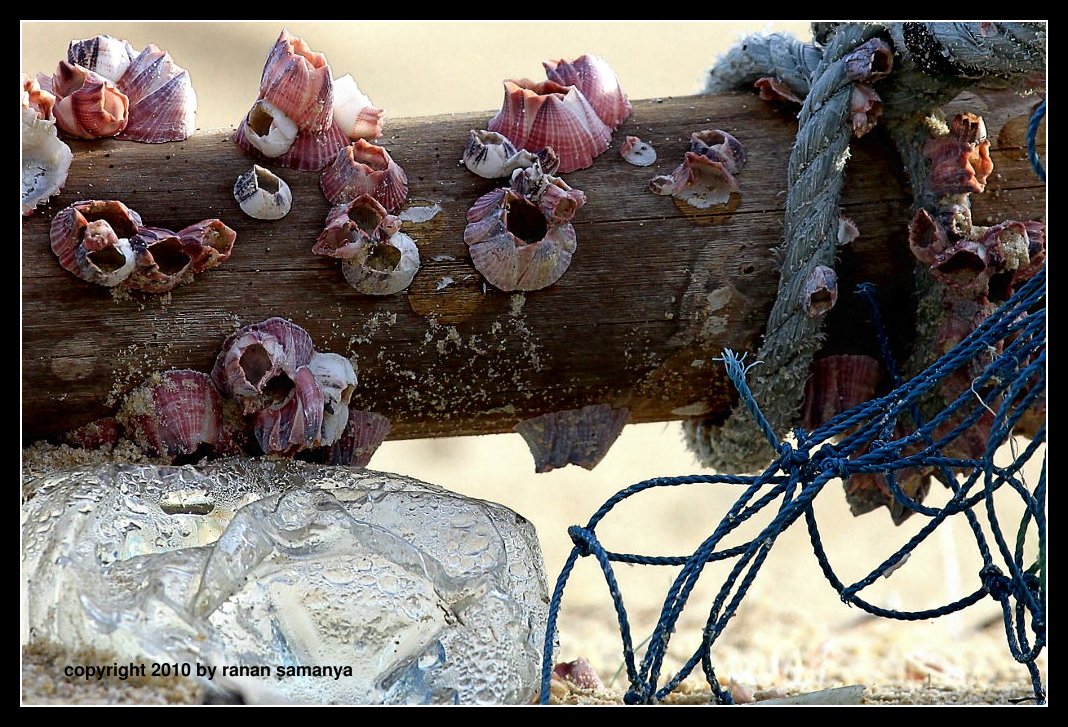
A broken Star
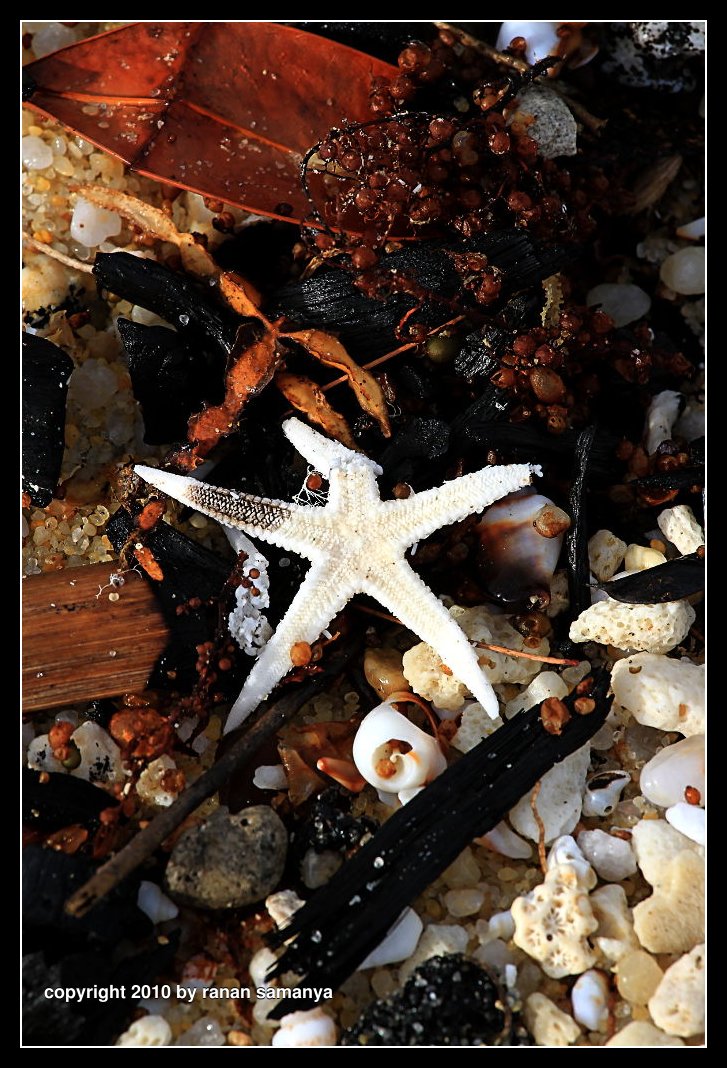
(Canon EOS 7D, Canon EF 70-200 f/4L IS @200mm, f/11.0, 1/250sec, ISO 200)
No, it’s not Laura’s star. Nor a starlight-star-bright sort of thing. Maybe more towards sea star, sea scar. It’s a scar of the sea, to have quite a number of dead sea stars washed on shore this morning at Pasir Panjang beach, Bintan. And they have been dead for quite a time, since what is left is the internal skeleton, made up of tiny ossicles (plates made mostly of calcium carbonate). But not long enough to degrade it.

(Canon EOS 7D, Canon EF 70-200 f/4L IS @200mm, f/5.6, 1/5000sec, ISO 200)
Cause of death is unknown. But there are quit a number of abiotic factors that can affect its life, including but not limited to oxygen concentration and wave force.
Here’s a good article on Factors affecting the abundance and size of Pisaster ocharceus in the rocky intertidal zone of southern British Columbia for you techie guys.
Hoi An’s banana flower salad
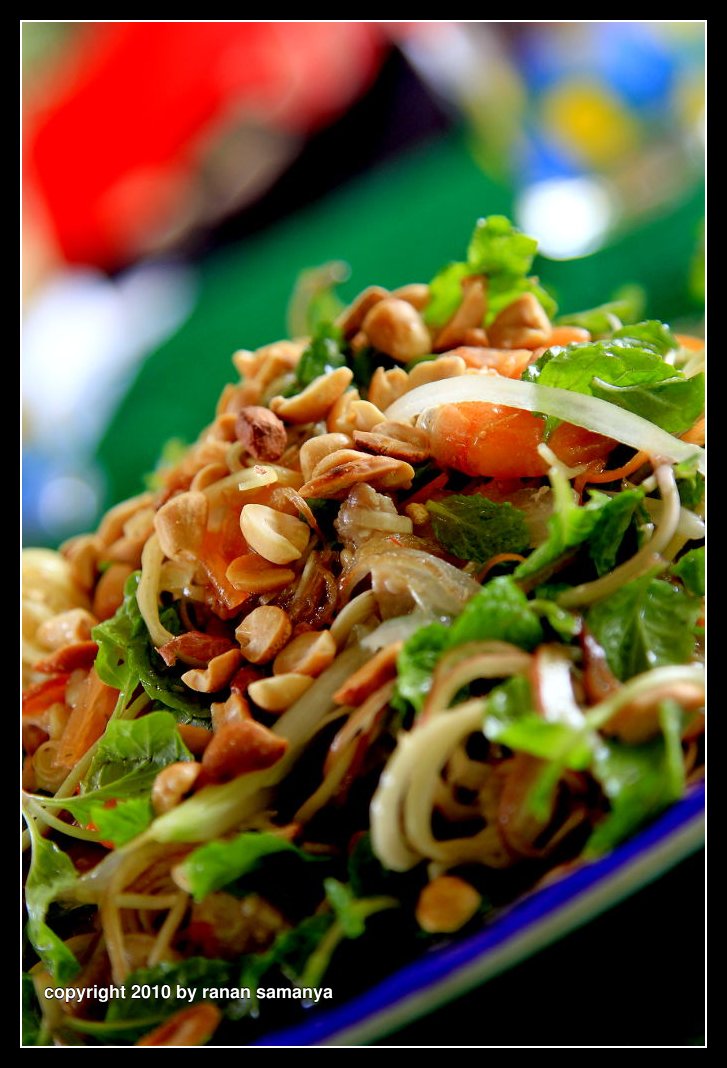
One day we asked our friendly hotel front-desk girls in Hoi An about real authentic local food. Yên, one of the girls, asked my notebook (no, not an electronic notebook!) and started writing in Vietnam language 4 menu items. Here’s one of them: búp chuối trộn, or banana flower salad.
It’s a big plate (for a salad) with tiny slices of banana flower, basil leaves, slices of cucumber, a little bit of onion, a few spoons of shrimps, and peanut topping. It is mouth watering, taste fresh, and not a bit too big a platter.
I can’t pronounce (or even spell) the name of the restaurant. It is so local with local people and us being the only foreigners, and none of them speak English (hence the notes by Yên is of big importance). Definitely authentic, definitely delicious.
[Canon EOS 7D, Canon EF 24-105 f/4L IS @75mm, f/4.0, 1/100sec, ISO 400]


 Ranan Samanya Photography
You must be logged in to post a comment.