Ranan Samanya Photography
fashion runways, portraits & personal branding, environment, and documentary photography
The ruins and mystery of My Son

(Canon EOS 7D, Canon EF 24-105 f/4L IS @28mm, f/11.0, 1/160sec, ISO 400)
When we decided to go to Mỹ Sơn (pronounced as [mǐˀ səːn]) at the outskirt of Hoi An, Vietnam, I was doing it just for the sake of completeness of our visit. I’ve been to other more grande ruins such as Borobudur, Ayutthaya, and Angkor Wat. The scale of My Son area is, compared to these all, minute; you can finish the whole complex within 2 hours.

(Canon EOS 7D, Canon EF 24-105 f/4L IS @70mm, f/8.0, 1/160sec, ISO 400)
From a total of 71 remnants of temples, towers, and various statues, only around 20 structures left in the complex, clustered in several groups. Many artifacts are now stored in a museum in Da Nang. It is, at least for me, not clear which are the towers and which are the temples. Probably because I was busy taking pictures and not listening well to our tour guide.

Shiva, carved in stone. (Canon EOS 7D, Canon EF 24-105 f/4L IS @32mm, f/4.0, 1/50sec, ISO 400)
What is clear, though, is that the complex was built in a nice valley by a river side, in the middle of a forest. And from the few brick buildings and stone statues it was also clear that the Champa people did a fine carving.

Shiva carved in stone. (Canon EOS 7D, Canon EF 24-105 f/4L IS @70mm, f/4.0, 1/80sec, ISO 400)
Mỹ Sơn was built between the 4th and 14th century by the Kings of Champa which occupied parts of Central Vietnam for over 1000 years. As it was built to honor Shiva, many Shiva statues can be found here.

Remnants of Ganesha stone panel. (Canon EOS 7D, Canon EF 24-105 f/4L IS @50mm, f/8.0, 1/4005sec, ISO 400)
The cultural value and the proof of Hindu influence into Southeast Asia has made UNESCO recognized it as a world heritage in 1999. This, however, was done after the complex endured more damage during the Vietnam War where the Americans bombed it as it was used as one of the VietCong’s base (also see Champa: the Destruction of My Son).

(Canon EOS 7D, Canon EF 24-105 f/4L IS @32mm, f/11.0, 1/160sec, ISO 400)
What fascinated us is the fact that all the ruins were all made out of bricks. All carvings on the brick walls were done after the walls were set, on the wall; they were not inserted into voids on the walls. How the bricks hold together remain a mystery to the historians to date.

One of the storehouse in the A1 area, which is the masterpiece of the complex. You WILL need to click this image to see the intricacy of the brick architecture! (Canon EOS 7D, Canon EF 70-200 f/4L IS @70mm, f/8.0, 1/400sec, ISO 400)
The small complex, the swarm of tourists, and the rush of the tour guides there, made the trip here less enjoyable. Many times, when you were trying to listen to your English speaking guide, someone else was explaining the same thing in Korean and yet another one in Spanish (or Portuguese) just a few meters away. If there is a next time for me to go back here, I will probably go by my own as early as possible before other tourists start to arrive.
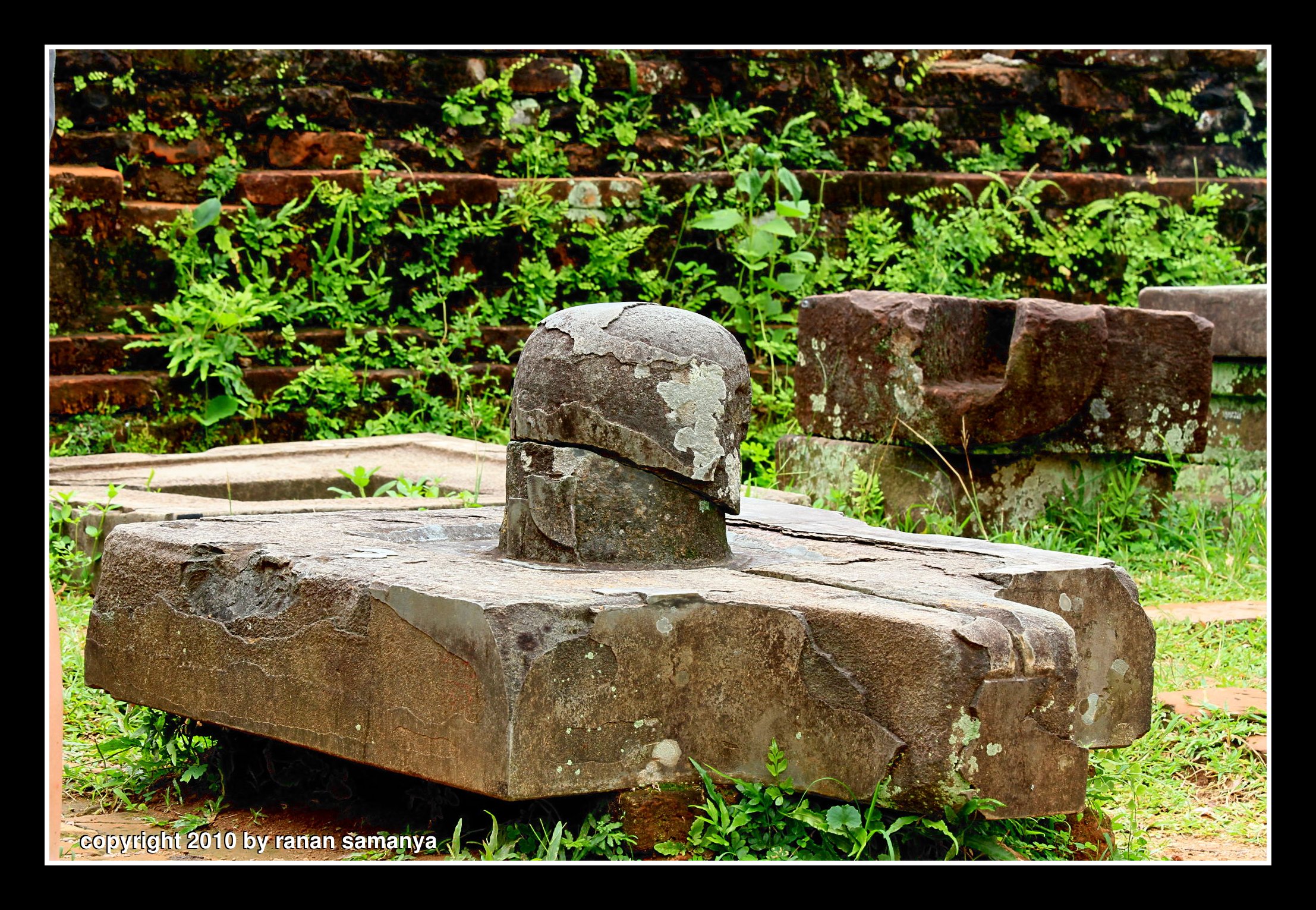
One of the few Linggas (a male symbol) on site. The middle part is missing, as it should be taller that this. (Canon EOS 7D, Canon EF 70-200 f/4L IS @97mm, f/11.0, 1/100sec, ISO 400)

Remnant of one of the temple which was hit by B52 bombs. (Canon EOS 7D, Canon EF 24-105 f/4L IS @40mm, f/4.0, 1/800sec, ISO 400)
Flight of the Eurasian Curlew
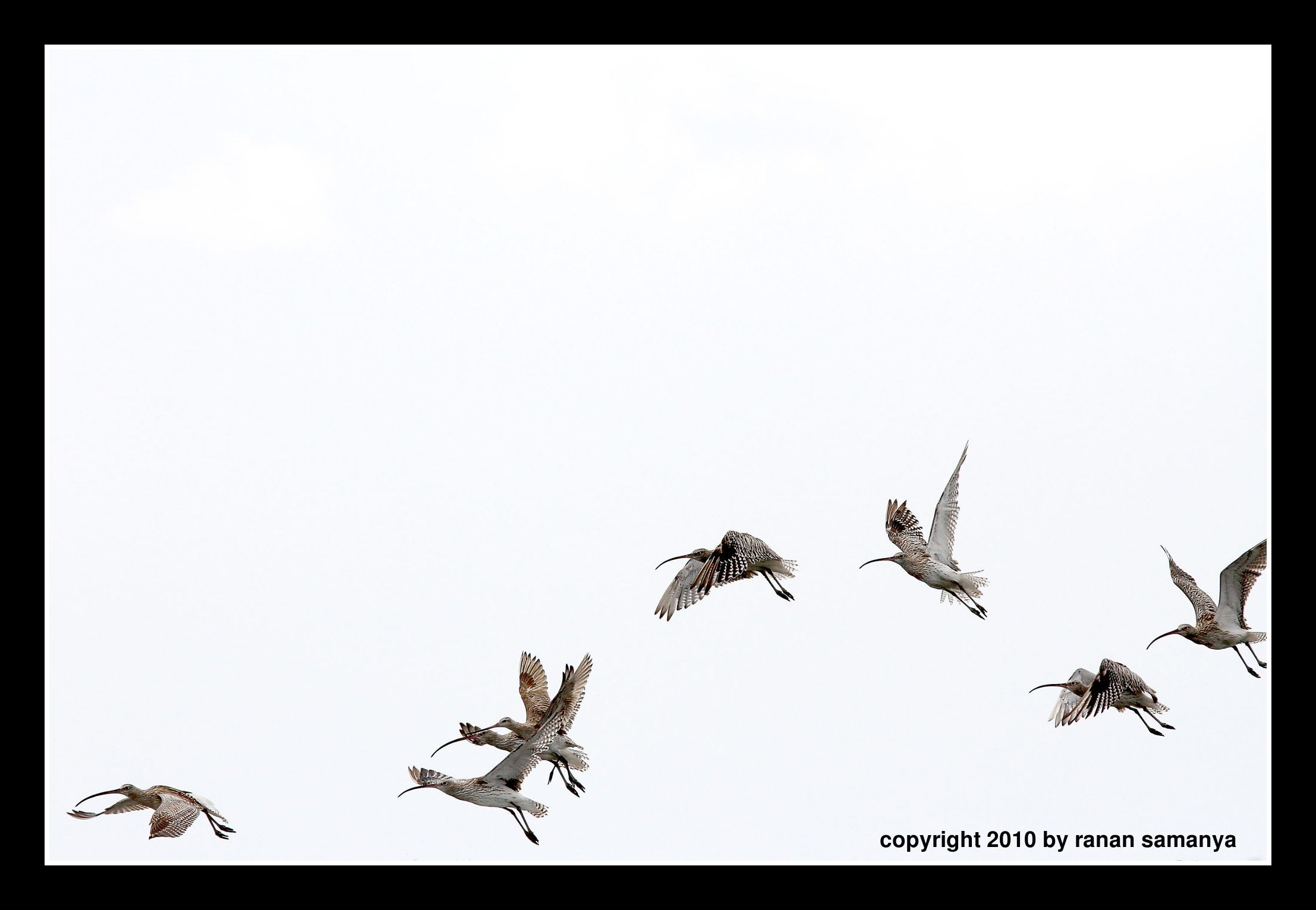
(Canon EOS 7D, Canon EF 70-200 f/4L IS @200mm, f/8.0, 1/4000sec, ISO 640)
Here’s another short note from yesterday’s survey. I love the curvature formation when they started to fly one by one, showing different wings position. The first one was taken against the sun, thus the rather plain white background. The second one was better as the sun was behind me. I like the splash of the sea, although the big rock could have been eliminated (but then we won’t have the splash, will we?).
Glorious feathers shown when you click each image.
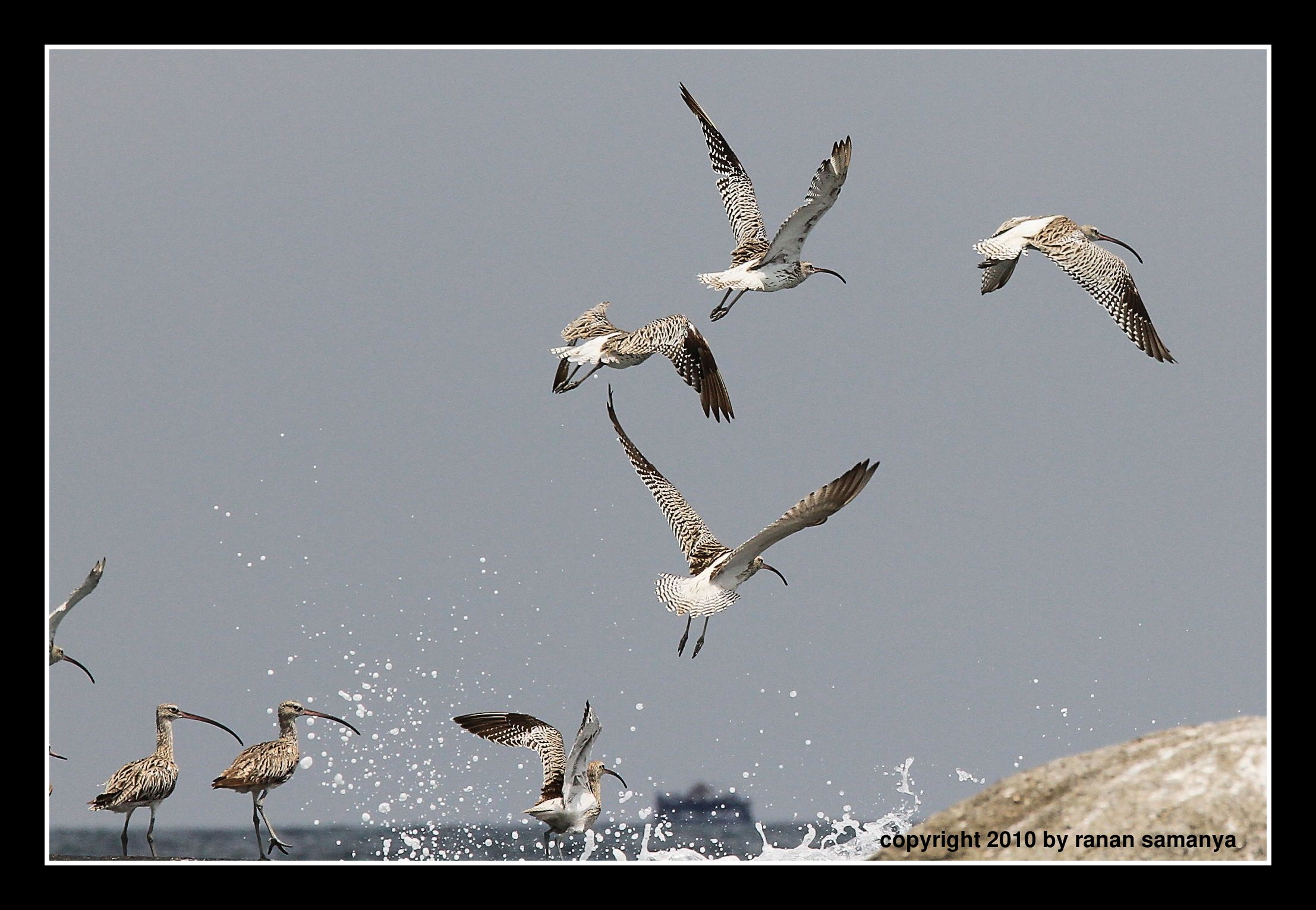
(Canon EOS 7D, Canon EF 70-200 f/4L IS @200mm, f/9.1, 1/4000sec, ISO 640)
More migrants are coming!
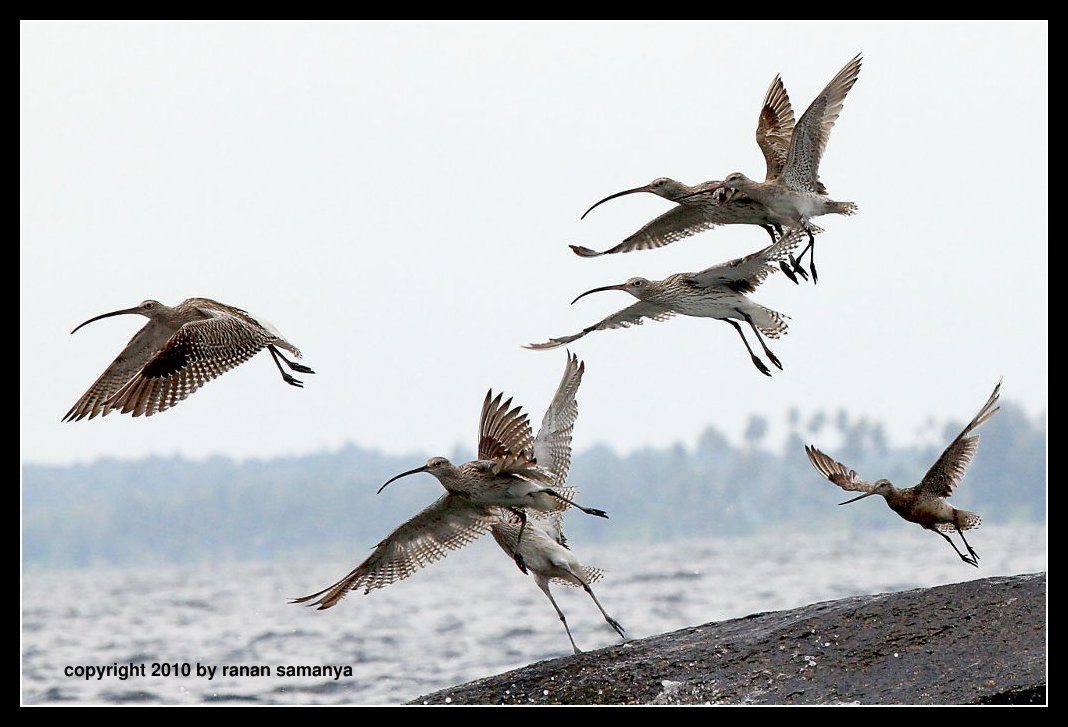
Just a quick note on what we found this morning in Segiling, Bintan, during our turtle survey this morning: more Eurasian Curlews are coming (see this post for full description). A flock of at least 22 birds were spotted (compared to a mere 3 last month), together with 2 new species we have yet to identify (one species got captured here on the bottom right and top right corners – maybe a Godwit?).
Click on the image to see the glorious feathers!
[Canon EOS 7D, Canon EF 70-200 f/4.0L IS @200mm, f/8.0, 1/4000sec, ISO 640]
Temple of Literature – the birth of Vietnamese scholars

Entrance to the Temple. (Canon EOS 7D, Canon EF 24-105L IS @24mm, f/4.0, 1/6400sec, ISO 100).
Let’s not get so transfixed by Ho Chi Minh. While he was a great scholar, he was not the only one. Viet Nam has, long before him, produced many great scholars.
It all started in 1070, when the reigning King Lý Thánh Tông (1023-1072) that time ordered the erection of Văn Miếu, the Temple of Literature, in Ha Noi to worship Confusius, sages, and Confusian scholars. In 1076, Vietnam’s first university, Quốc Tử Giám (National University), was established under the direction of King Lý Nhân Tông (1066-1128) near the Temple, setting up the foundation for the development of Confucianism in Viet Nam. Oh, BTW, this King started reigning at the age of 7!
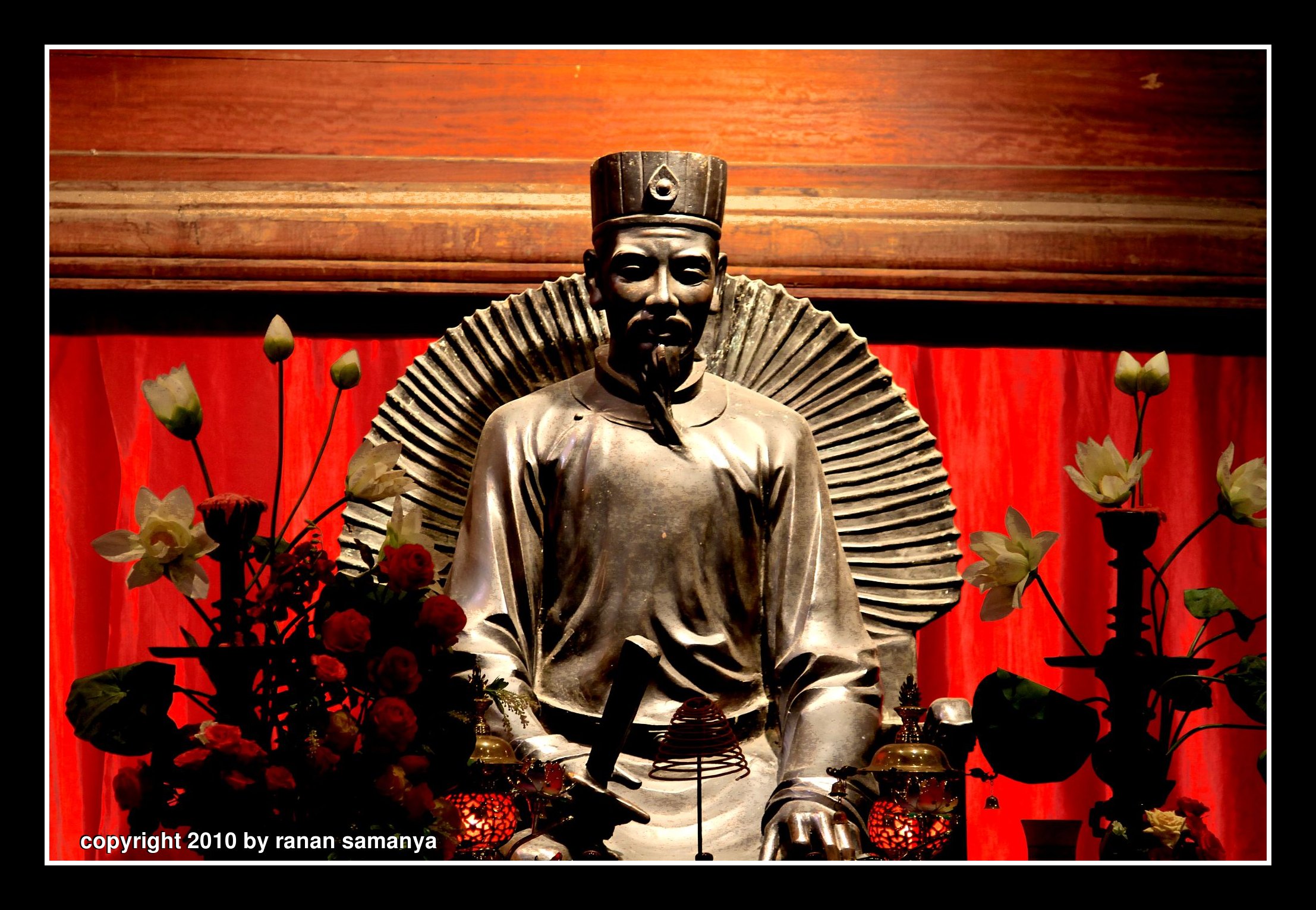
Statue of Confucius. (Canon EOS 7D, Canon EF 24-105 f/4.0L IS @80mm, f/4.0, 1/15sec, ISO 800).
Over the years parts the Temple have been destroyed. In 1483, King Lê Thánh Tông (1442-1497) reconstructed the Temple and enlarge the University into what it is now: a spacius architectural compound.
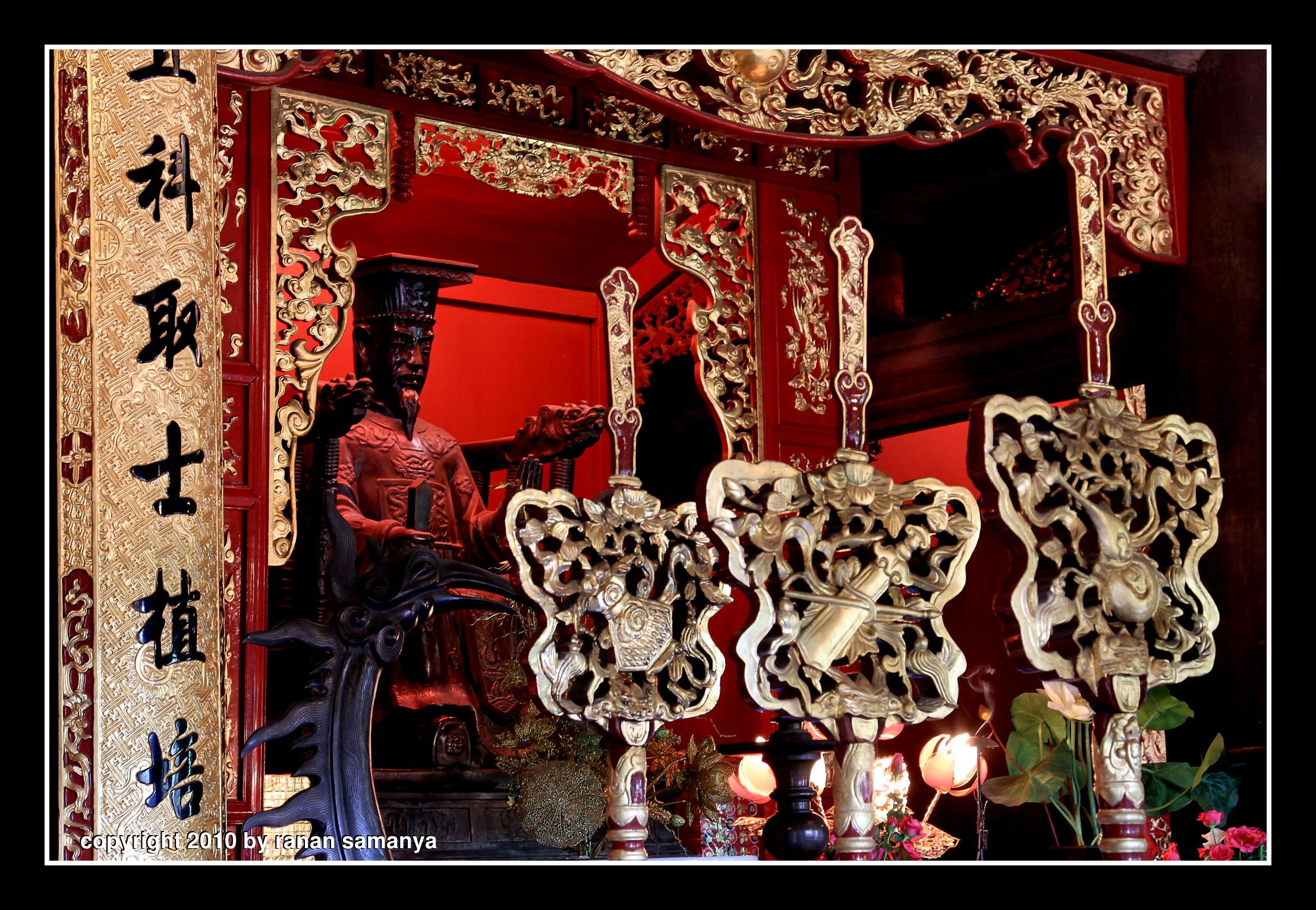
King Lê Thánh Tông statue. (Canon EOS 7D, Canon EF 24-105 f/4.0L IS @50mm, f/6.4, 1/8sec, ISO 640).
He developed Confucian education and examination, and also erected the first doctor stelae to honour students and encourage them to learn Confucianism to have their names in the golden board in Thái Học house.
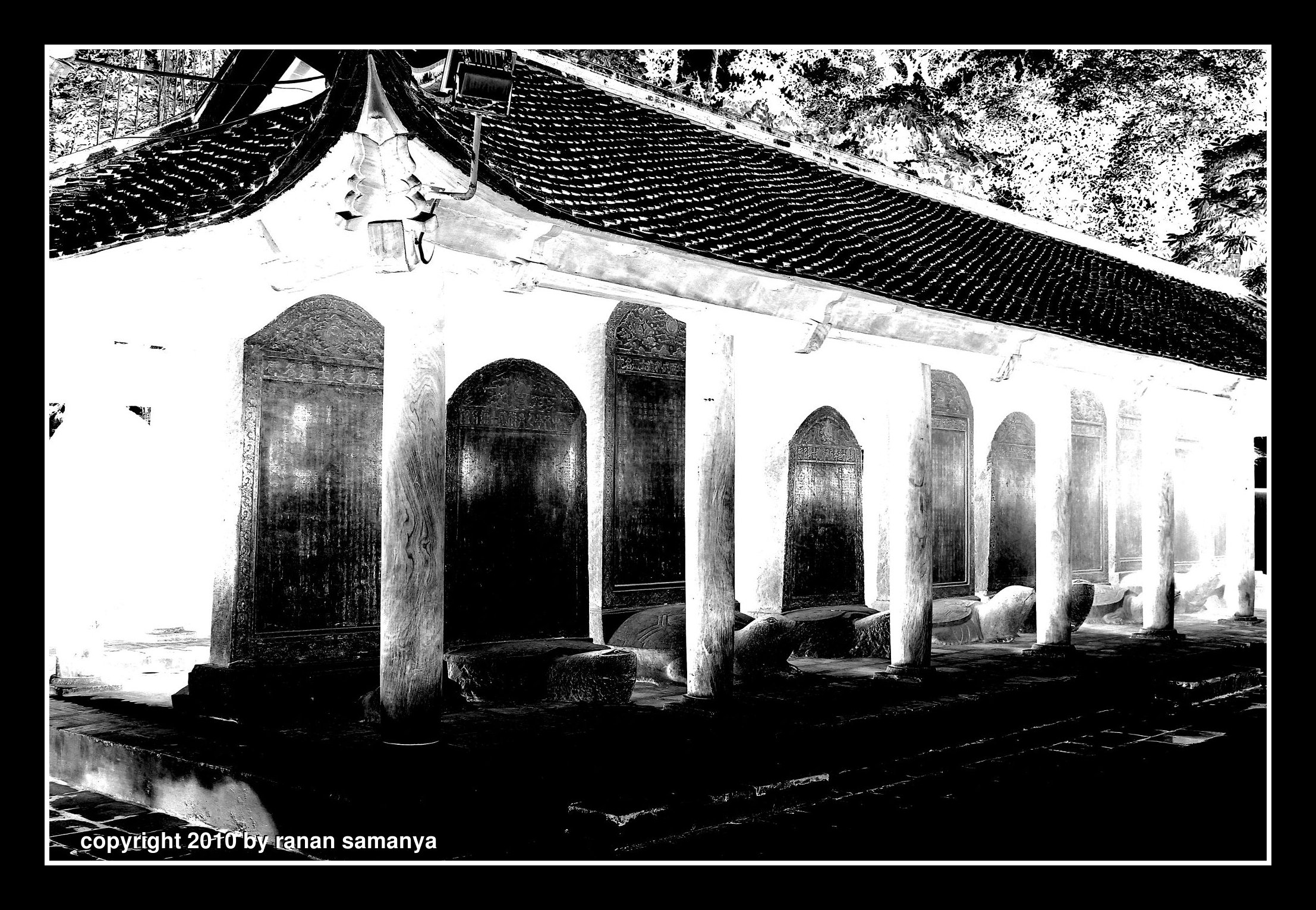
One of the two house that protects 82 stelae of doctorates. These were planted on top of tortoise shells, which signify longevity and healthy life. (Canon EOS 7D, Canon EF 24-105 f/4.0L IS @28mm, f/8.0, 1/60sec, ISO 200).
Being inside the compound, I felt going back in time into those times. Most of the buildings were in very good condition, and the artifacts were rich in details (again, I suggest you to click on each picture to savior the details of these art pieces). Dark brown-black, red, and gold colors dominated the interior. There are in total five different courtyards, symbolizing the five elements forming up the world: fire, water, earth, metal and wood. On a sunny day it is very hot outside, but not inside the buildings (which, by the way, was assembled with neither nails nor screws). The cool air inside was due to the high ceiling and plenty of openings in all directions. It is sad, though, to see a few vandalism by the locals especially inside of the big bell beside the Thái Học house.

One of the two bonze cranes on top of tortoises. Both are considered sacred animals. The tortoise is believed to live ten thousand years, and the crane one thousand years; thus, the presence of this symbol means, a "May you be remembered for one thousand years, and may your cult endure for ten thousand years. (Canon EOS 7D, Canon EF 24-105 f/4.0L IS @28mm, f/4.0, 1/13sec, ISO 640).
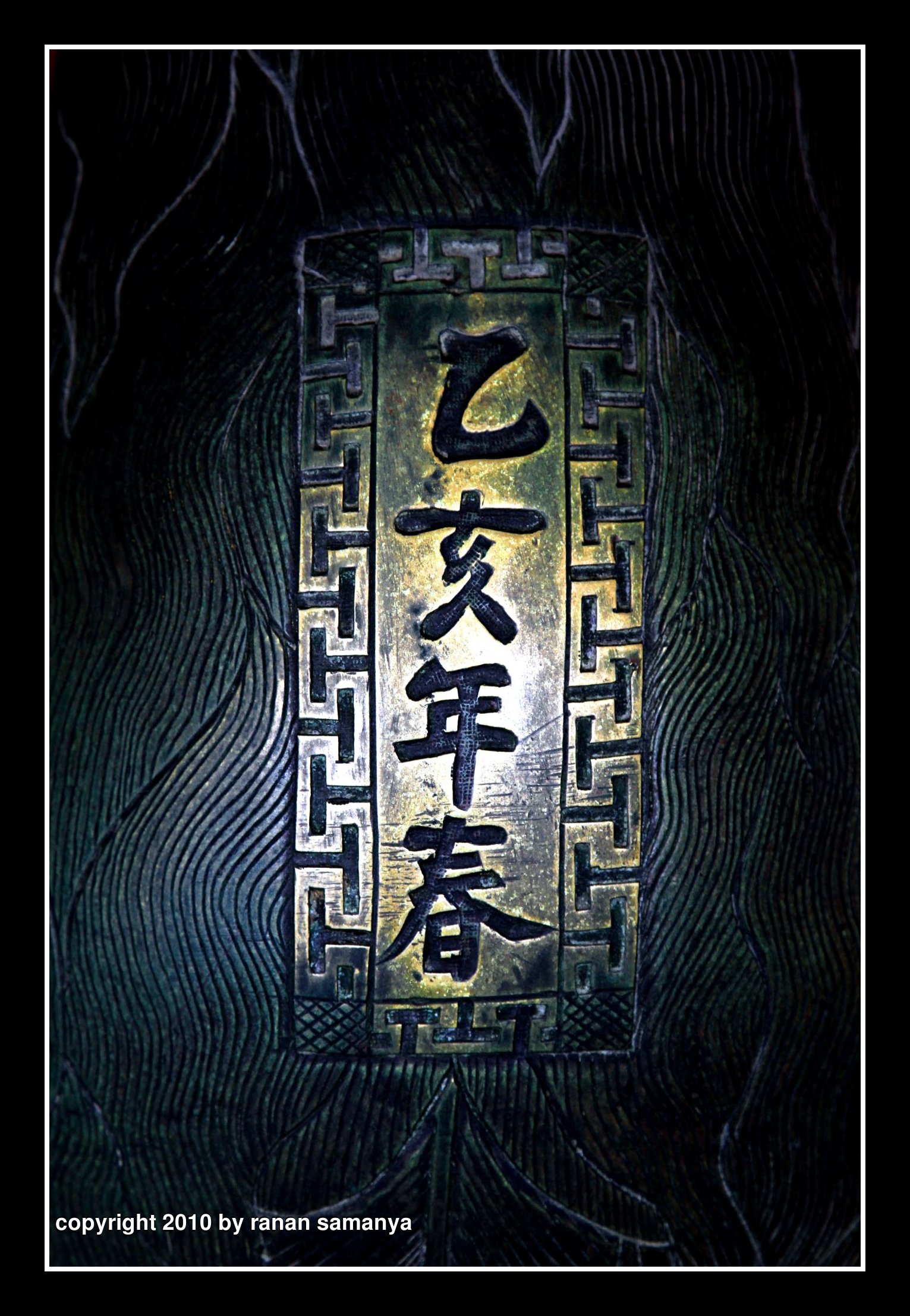
Insignia on the chest of the crane. Can anybody help translating it? (Canon EOS 7D, Canon EF 24-105 f/4.0L IS @105mm, f/6.4, 1/25sec, ISO 400).

Two dragons (another sacred animal, a symbol of power and nobility) holding up incense burning pot. (Canon EOS 7D, Canon EF 24-105 f/4.0L IS @32mm, f/4.0, 1/125sec, ISO 640).
The University recorded 1,307 graduates from 82 final exams from 1442-1779. Comparing the number with today’s standard is insane, as the number of scholars that time is so limited. What is important, IMO, is what Confucius said: “It does not matter how slowly you go as long as you do not stop”.

Old examination papers. (Canon EOS 7D, Canon EF 24-105 f/4.0L IS @105mm, f/6.4, 1/20sec, ISO 1600).
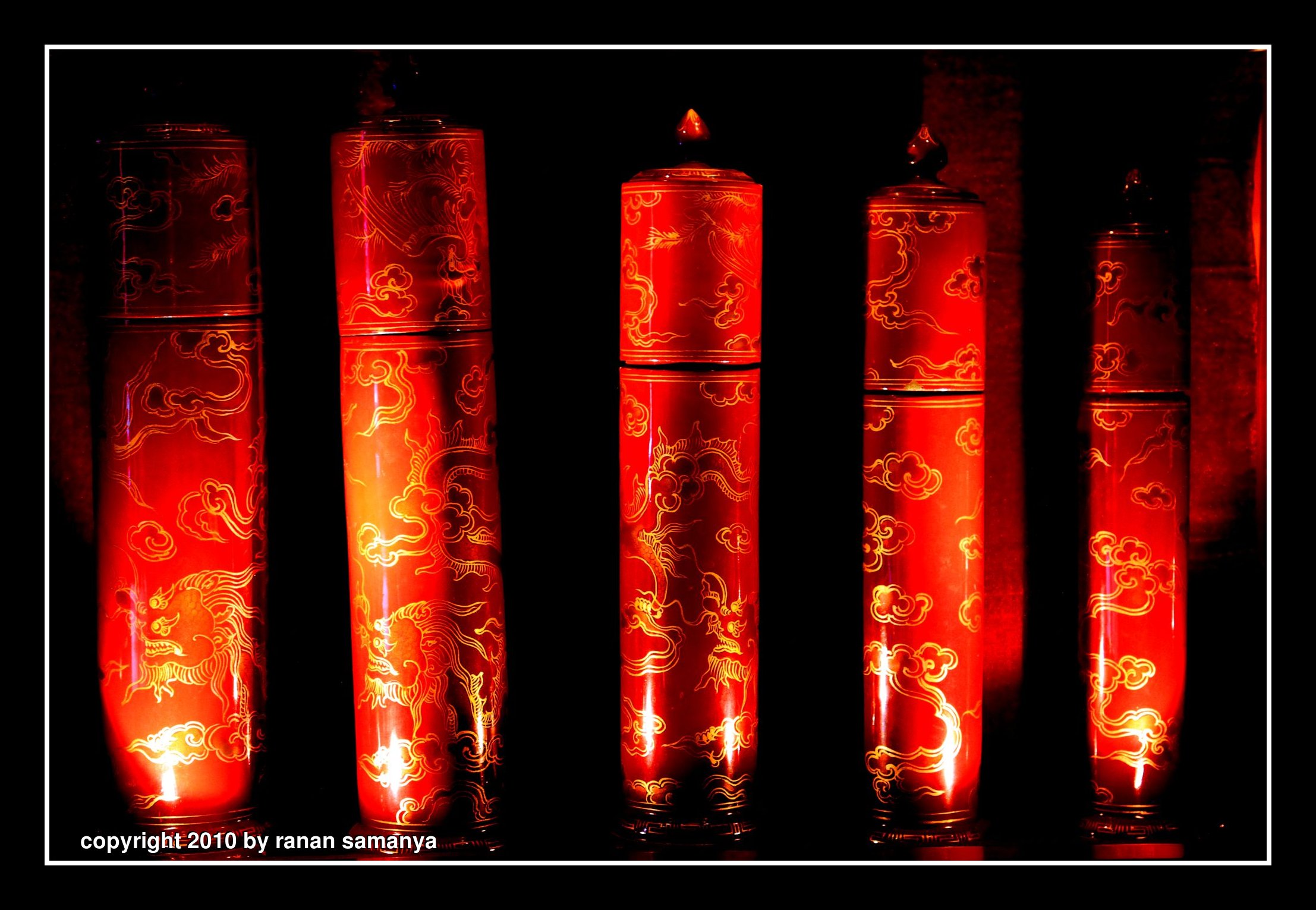
Holders for paper scrolls. (Canon EOS 7D, Canon EF 24-105 f/4.0L IS @47mm, f/6.4, 1/6sec, ISO 640).
Understanding (and appreciating) Ho Chi Minh
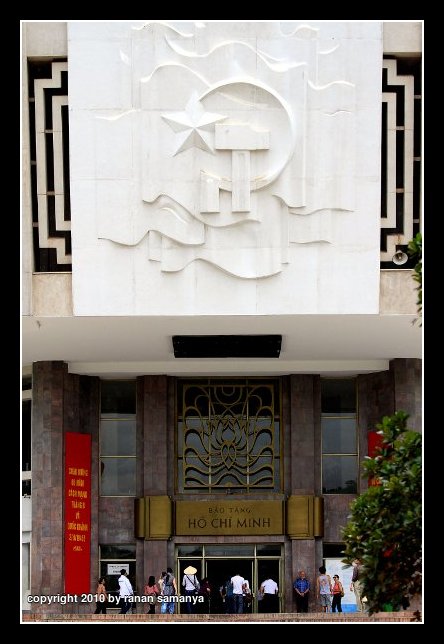
Entrance to Ho Chi Minh Museum in Hanoi. Canon EOS 7D, Canon EOS 24-105 f/4.0L IS @70mm, f/4.0, 1/1250sec, ISO 400.
We started our Vietnam journey from the South, but to be able to understand Uncle Ho, his works, vision, and ideology it is best to go up north to Ho Chi Minh museum in Ha Noi.
Built in 5 years with USSR aid, it was opened in 1990 to commemorate the 100 years birthday of him. The museum covered a huge 10,000 m² area, and are divided into several themes according to his life. The main showroom exhibits more than 2,000 documents, articles and pictures with very artistic display which I assume depict the fine art of Soviet Union.
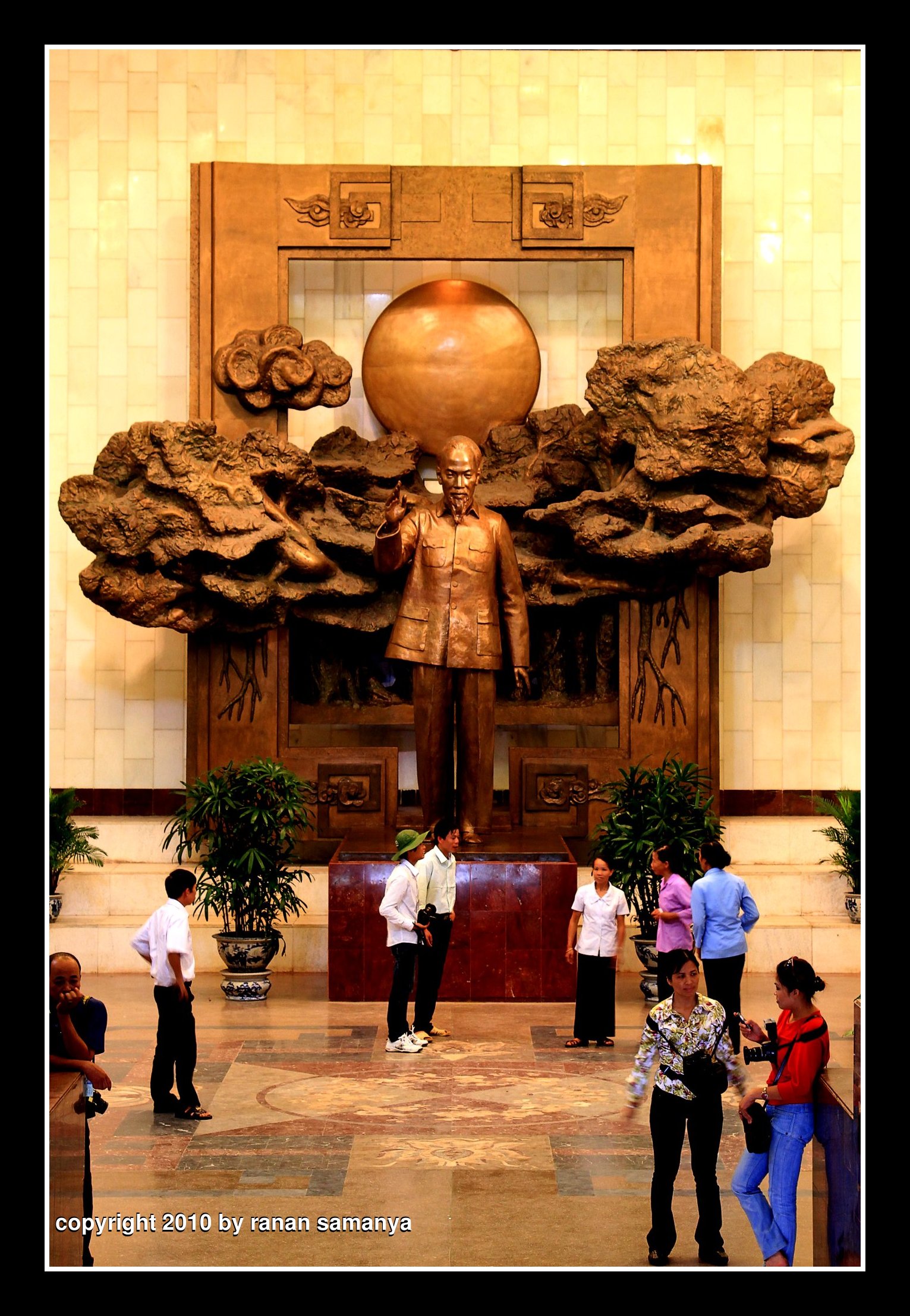
Ho Chi Minh statue greets everybody into the museum. Canon EOS 7D, Canon EOS 24-105 f/4.0L IS @47mm, f/5.6, 1/6sec, ISO 800.
After a tight security check (where we will need to leave all bags behind – I even had to leave my camera back- and go though metal detectors) we will be greeting by Ho Chi Minh statue in the main assembly hall. From here the first room is filled with early historical moments behind glasses. It is beyond this point that art started to dominate. The inclusion of art into the exhibits (and the clever lighting) make the museum warm yet calm when displaying the war memorabilia.
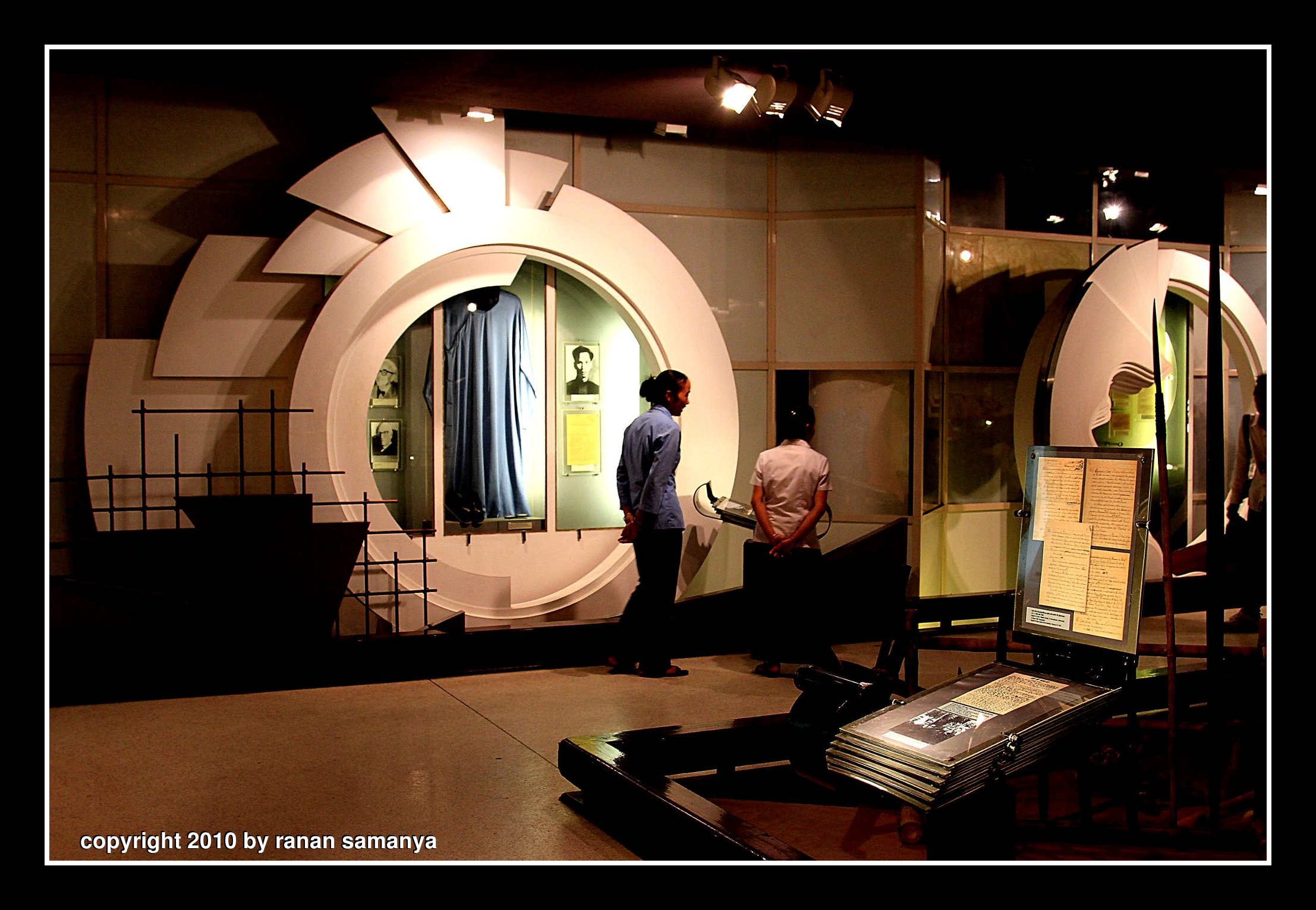
Canon EOS 7D, Canon EOS 24-105 f/4.0L IS @24mm, f/4.5, 1/40sec, ISO 800.
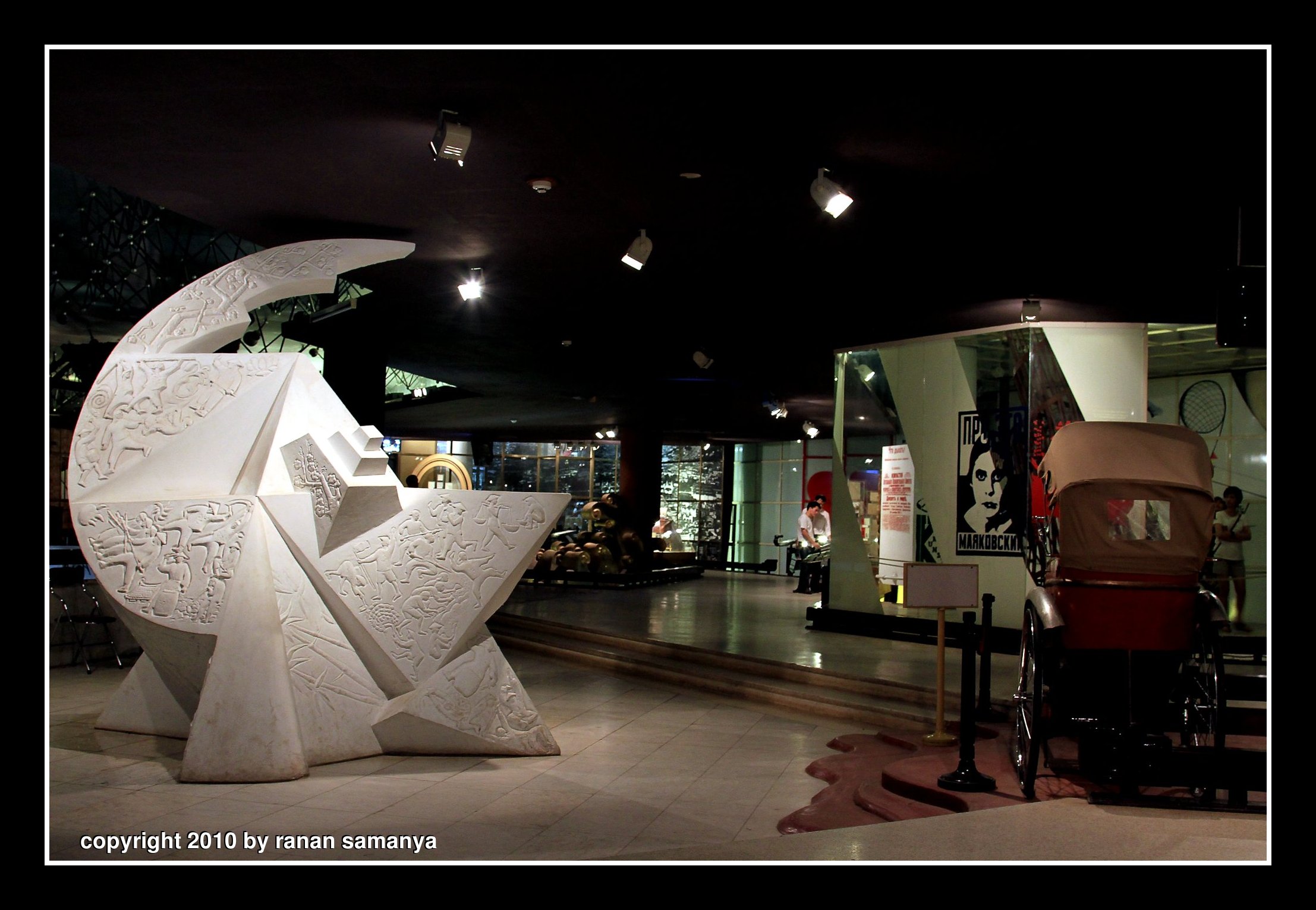
Canon EOS 7D, Canon EOS 24-105 f/4.0L IS @24mm, f/5.6, 1/20sec, ISO 800.
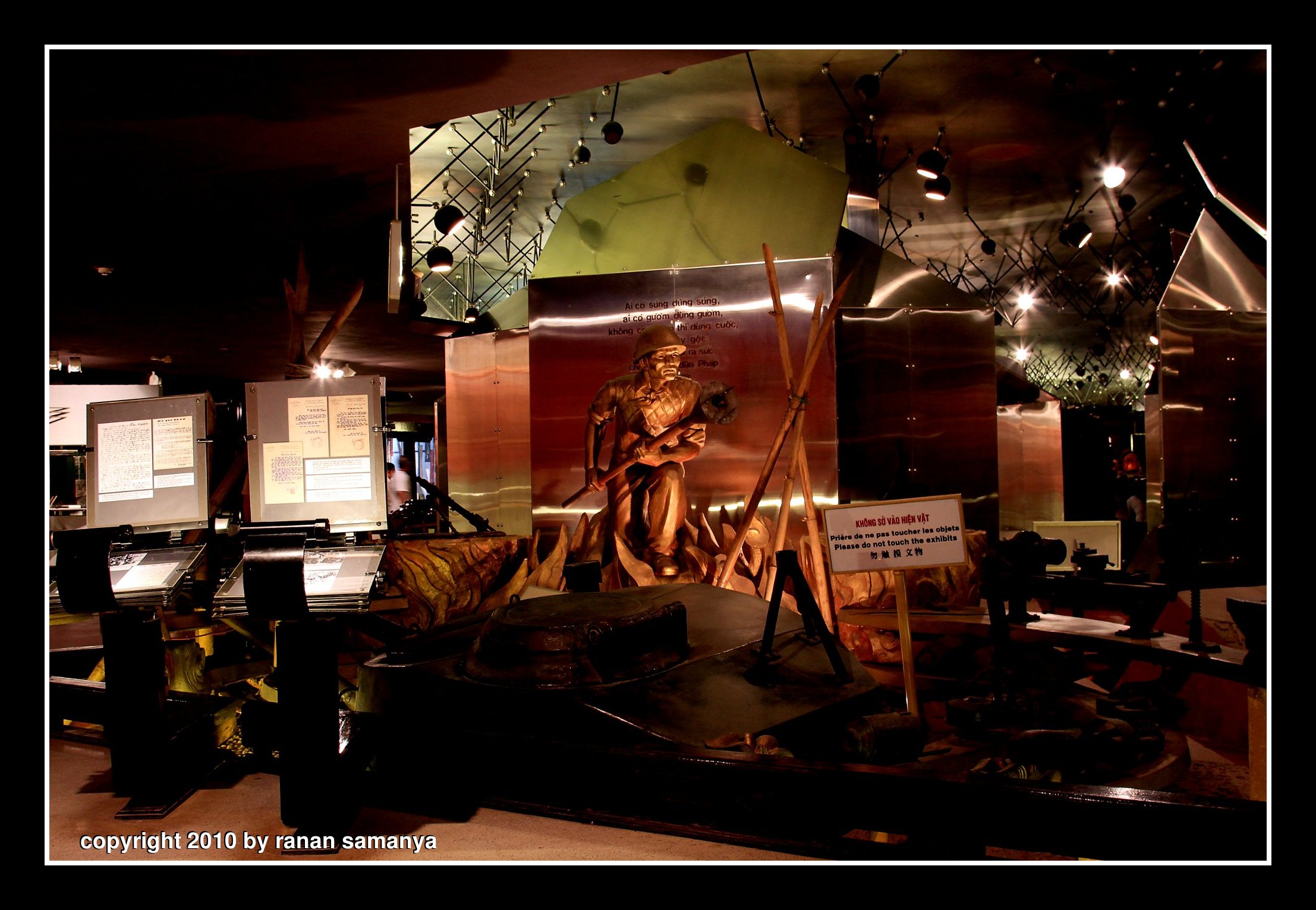
Vietnam war era. Canon EOS 7D, Canon EOS 24-105 f/4.0L IS @24mm, f/6.3, 1/4sec, ISO 640.
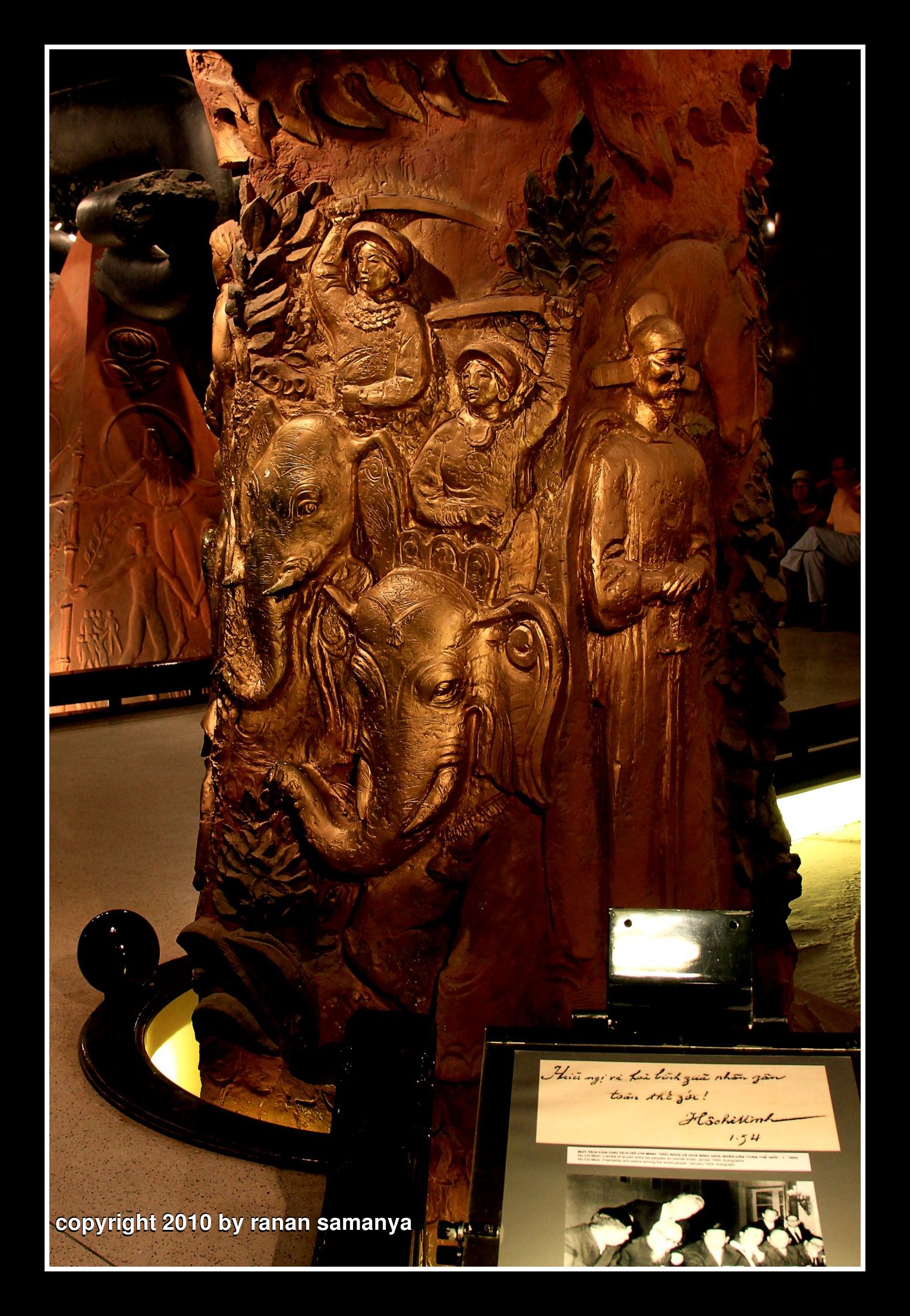
"Friendship and peace among the world people". Autograph from January 1954. Below it, a photo when Ho Chi Minh signed a declaration in the Conference of the Representatives from the Communist and Workers parties in Moscow, January 1960. Canon EOS 7D, Canon EOS 24-105 f/4.0L IS @24mm, f/6.3, 1/8sec, ISO 640.
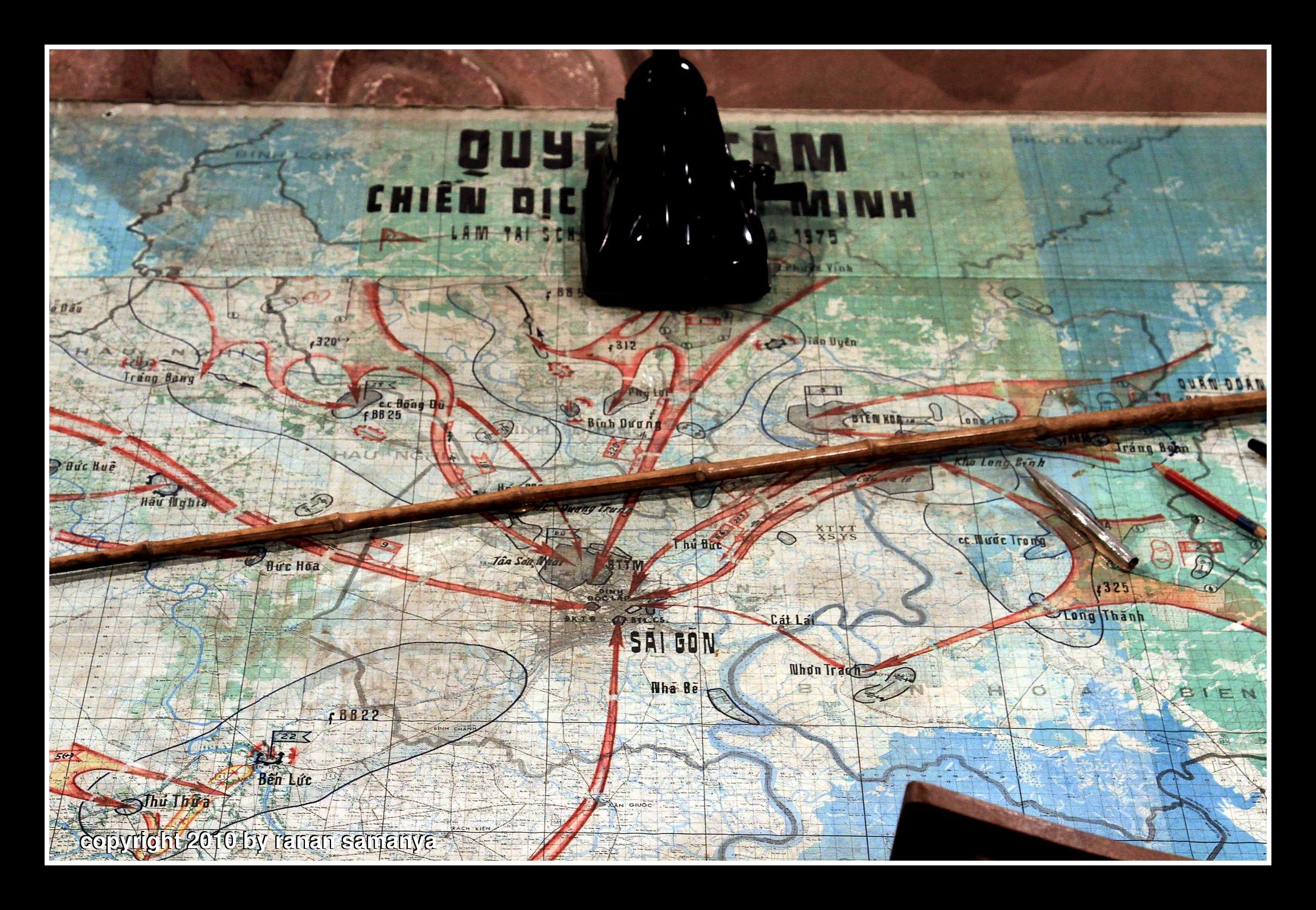
The 1975 campaign that ended 20 years of war. Canon EOS 7D, Canon EOS 24-105 f/4.0L IS @55mm, f/6.3, 1/10sec, ISO 640.
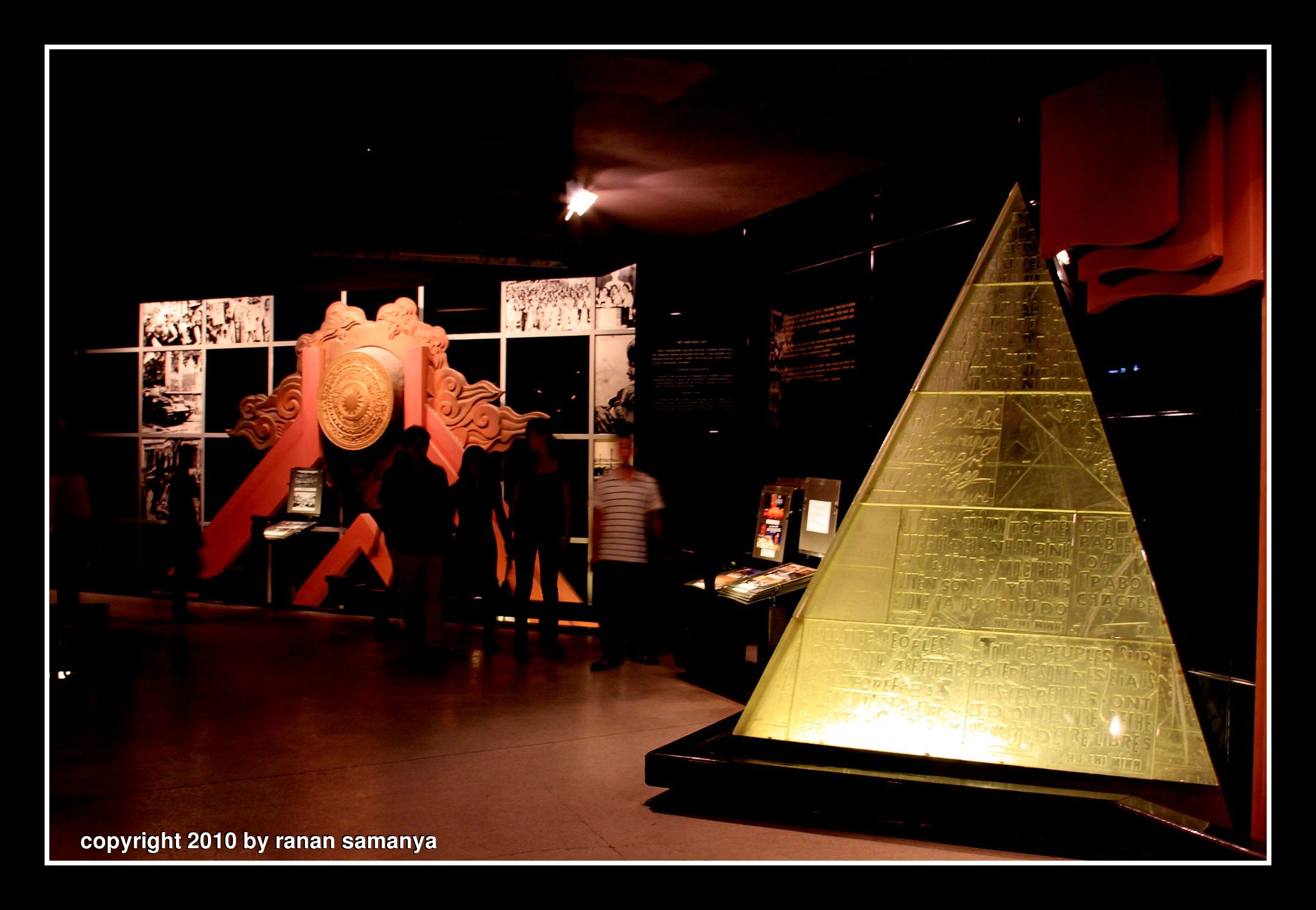
A pyramid of glass with one of Ho Chi minh's quote in many languages. Canon EOS 7D, Canon EOS 24-105 f/4.0L IS @24mm, f/8.0, 1/4sec, ISO 800.

"All the peoples on earth are equal, each people has the right to life happines and liberty". Canon EOS 7D, Canon EOS 24-105 f/4.0L IS @28mm, f/8.0, 1/50sec, ISO 800.
At the end of the exhibits we can enter a small hall to watch video of the development Vietnam has gone so far from three different LCD TVs side by side simultaneously.
I would usually skip museums when visiting countries, but this is one museum that is much well worth visiting. I would hope to come again one day and learn more….
Ho Chi Minh – the center of Viet Nam
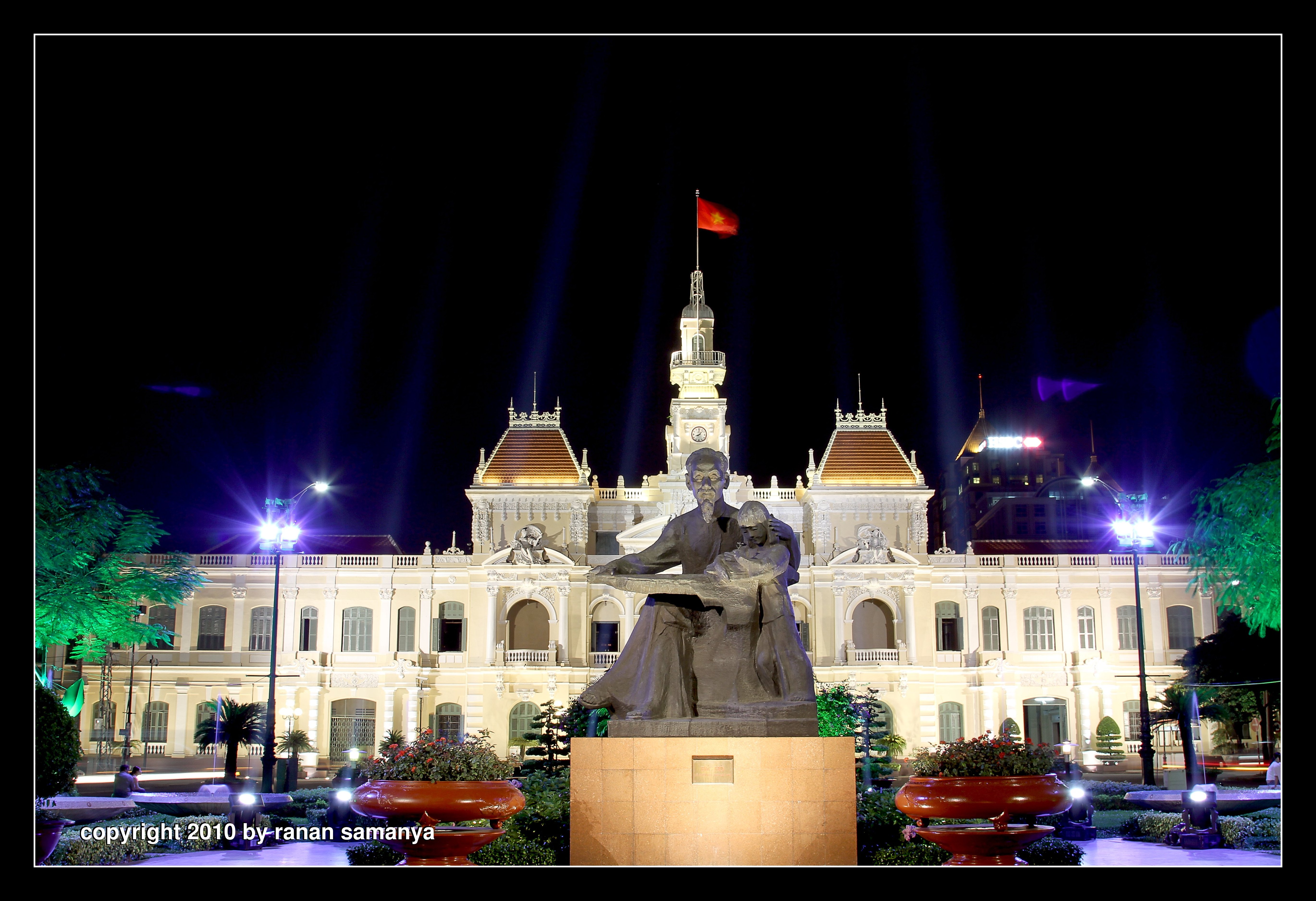
Bac Ho statue in front of Saigon City Hall.
When we decided to go to Viet Nam, it has never occurred to me that I will become so amazed with Ho Chi Minh. From Saigon (aka Ho Chi Minh City) to Ha Noi, we can see his figure all over the country: as a statue, on political party posters and banners, on each Vietnamese currency note, and in stories people tell.
Bac Ho (Uncle Ho) once said,
“The object of my relationship with Vietnam has been to heal the wounds that exist, particularly among our veterans, and to move forward with a positive relationship…“.
I had to compare him with our Indonesian great leaders: Soekarno and Soeharto. And witnessing the development and achievement Viet Nam has today, I would say that he is an even greater leader than ours.
So here is the first of a few tidbits from a rush 12 days visit to the country of the Great Land beyond the South.
I just had to upload a higher than my usual resolution to enable us to see the details of statue and the City Hall. Using f/8.0 was enough to show this (but now I wish I have used f/22!). Lucky the area was brightly lit, but nevertheless I used a tripod for the 2 second shutter. Electronic level was also used together with LiveView with exposure simulation on. It took me quite a few frames before I was satisfied with the Viet Nam flag on top of the City Hall.
[Canon EOS 7D, Canon EF 24-105 f/4L IS @24mm, f/8.0, 2sec, ISO 100]
Flight of the Lesser Sand Plover
I never realized that shoreline birds are fascinating, especially if we can observe them closely. In the fraction of time when the rain stopped and the sun showed up a bit, 1/4000sec was possible to freeze their fly.
A flock of Lesser Sand Plovers (Charadrius mongolus) in Segiling, Bintan, with moulting plumage for the non-breeding period. They breed discontinuously in areas across east Asia from the Himalayas to North East Siberia, and occasionally in Alaska. Winter, non-breeding distribution includes the coasts and estuaries around the Indian Ocean and South-West Pacific (including Australia and New Zealand). They are also known to winter in eastern and southern Africa, from the western shores of the Red Sea to South Africa.
[Canon EOS 7D, Canon EF 70-200 f/4L IS @200mm, f/5.6, 1/4000sec, ISO 400]
(with thanks to Iwan Londo for helping with species identification)
Higher resolution images below:


The story of the Eurasian Curlew
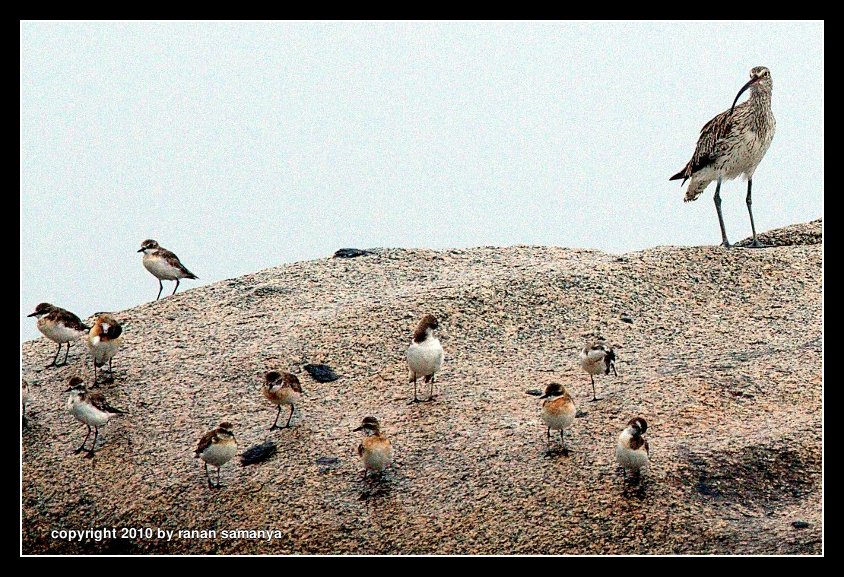 First there were three of these Eurasian Curlews (Numenius arquata orientalis) -or Gajahan Besar in Indonesian- among a flock of Lesser Sand Plovers. One by one they flew away, probably felt disturbed by my presence in the rain, off Segiling shoreline, Bintan.
They have one of the largest bill among sandpiper species. As other sandpipers, they feed on invertebrates during low tide, bur are also known to feed on diverse range of diet such as terrestrial insects (e.g. Coleoptera and Orthoptera), spiders, berries and seeds, as well as small fish, amphibians, lizards, young birds and small rodents. Their long legs are nature’s adaptation to enable them foraging in muddy and boggy areas.
Their geographic range can be seen from Oiseaux.net. They breed in the temperate regions of Europe and Asia, and migrate to the warmer southern area in the muddy coasts, bays and estuaries with tidal mudflats and sandflats, rocky and sandy beaches with many pools, mangroves, saltmarshes, coastal meadows and muddy shores of coastal lagoons, inland lakes and rivers.
[Canon EOS 7D, Canon EF 70-200 f/4L IS, f/8.0, 1/750sec, ISO 400]


 Ranan Samanya Photography
You must be logged in to post a comment.